
September 4, 2026 · Construction Surveys, Surveying, Surveyor Alberta BC and Yukon
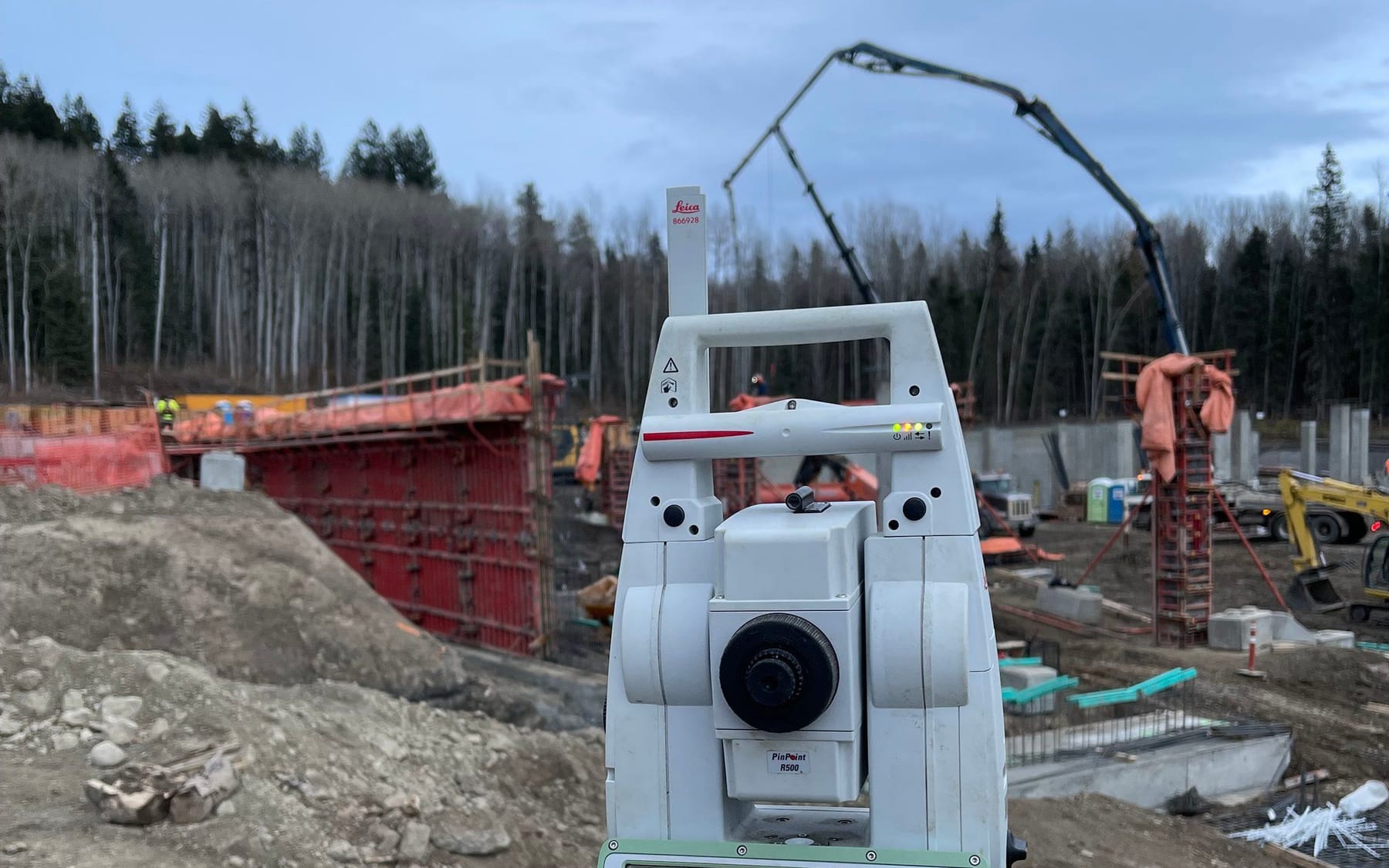
Construction Surveying From Breaking Ground to As-Built
Every trade on a site builds off marks somebody set. Here is what the surveyor is doing at each stage of a project, and why it matters more than it looks.
Nothing gets built where it should without a surveyor
A construction drawing is a set of coordinates and elevations. The site is dirt. The construction surveyor is the person who turns one into the other, putting the design on the ground accurately enough that the excavator, the formwork crew, the steel erectors and the pipe layers can all build to the same marks and have it come together.PCI Surveys runs construction survey crews out of Prince George, Edmonton, Vancouver and Whitehorse. What follows is the job as it actually unfolds, from the first control point to the final as-built.
Control comes first
Before anything is staked, the site needs control: a network of points with known coordinates and elevations that every later measurement is tied to. Get this wrong and everything built afterward is wrong together, which is the expensive way to be consistent.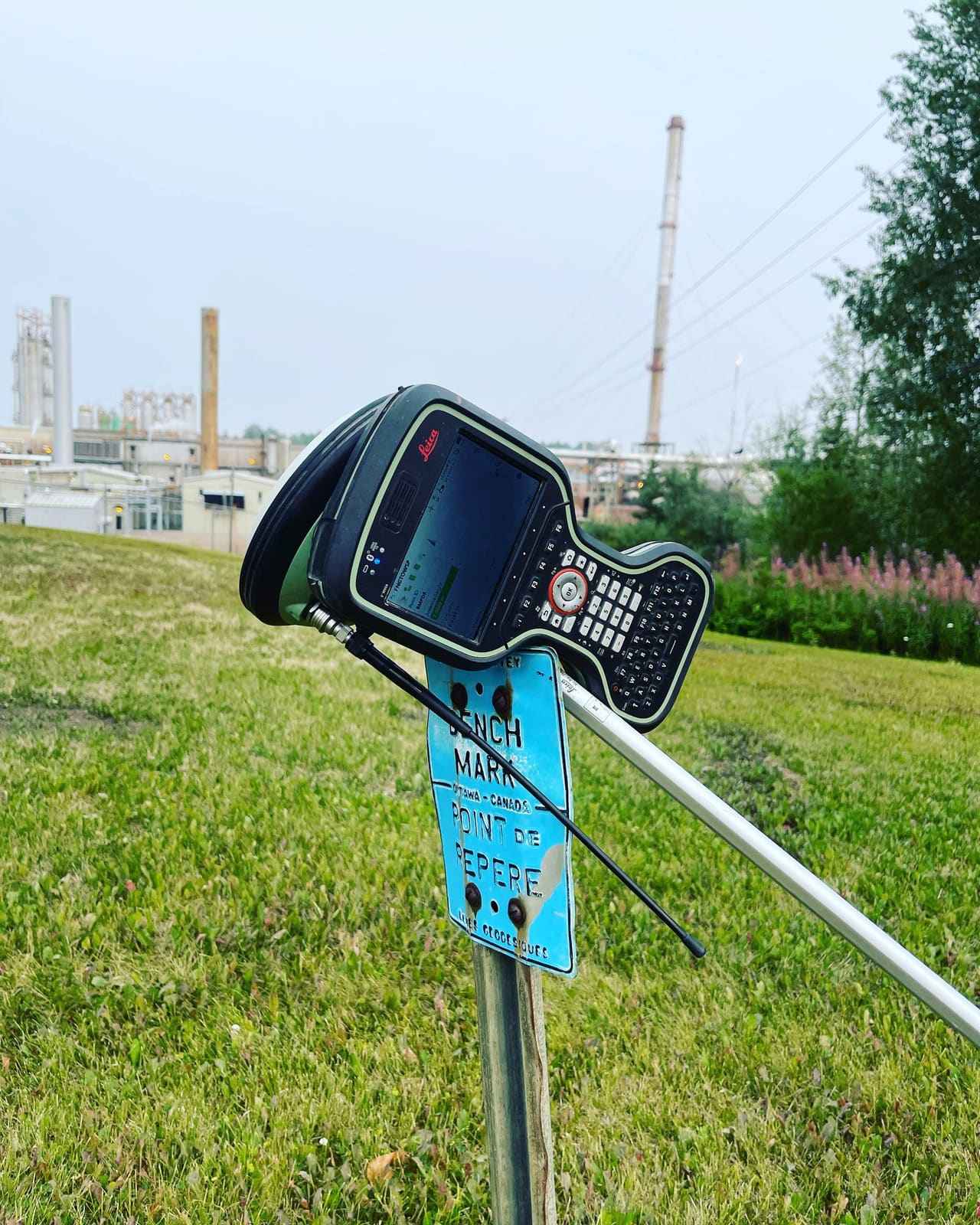
PCI ties site control to published monuments and bench marks, densifies it across the site, and places points where the construction plan will not bury or bulldoze them by the second month. Control is checked at every setup, because a knocked tripod leg should never become a misplaced footing.
Before the digging
Early works are layout at their simplest and most consequential: clearing limits, geotechnical borehole locations, access roads, laydown areas, erosion controls. Stakes go in, flagging goes up, and the machines follow.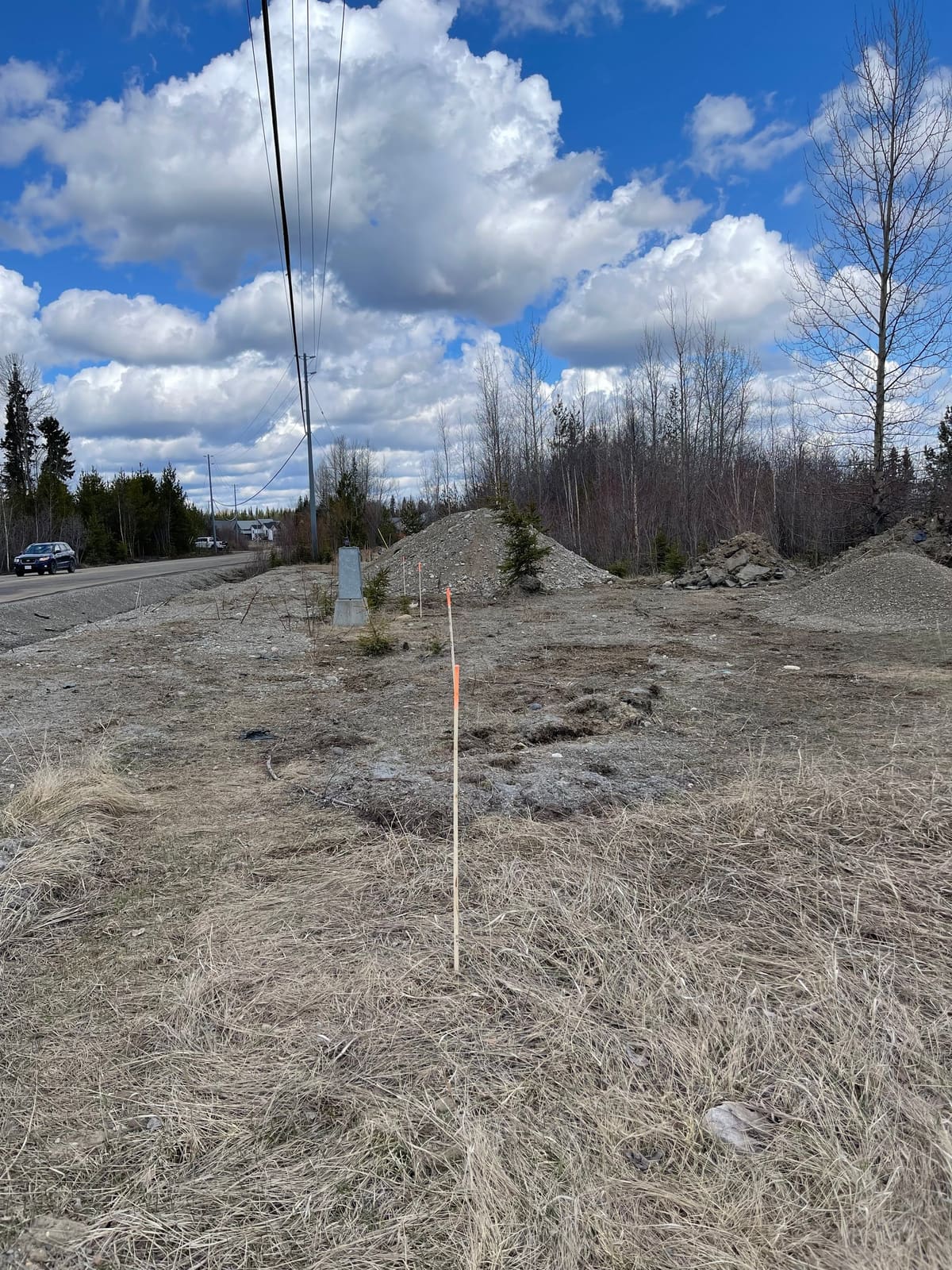
This is also where the utility locate happens. Nothing gets staked for excavation until the buried lines inside the work area have been found and marked. PCI's locating crews and survey crews are often the same truck.
Excavation and foundations
Once the ground opens, layout turns into grade control. Cut and fill stakes tell the operator how far down to dig or how far up to fill, and offset stakes hold the line where the excavation itself would destroy a stake set on it.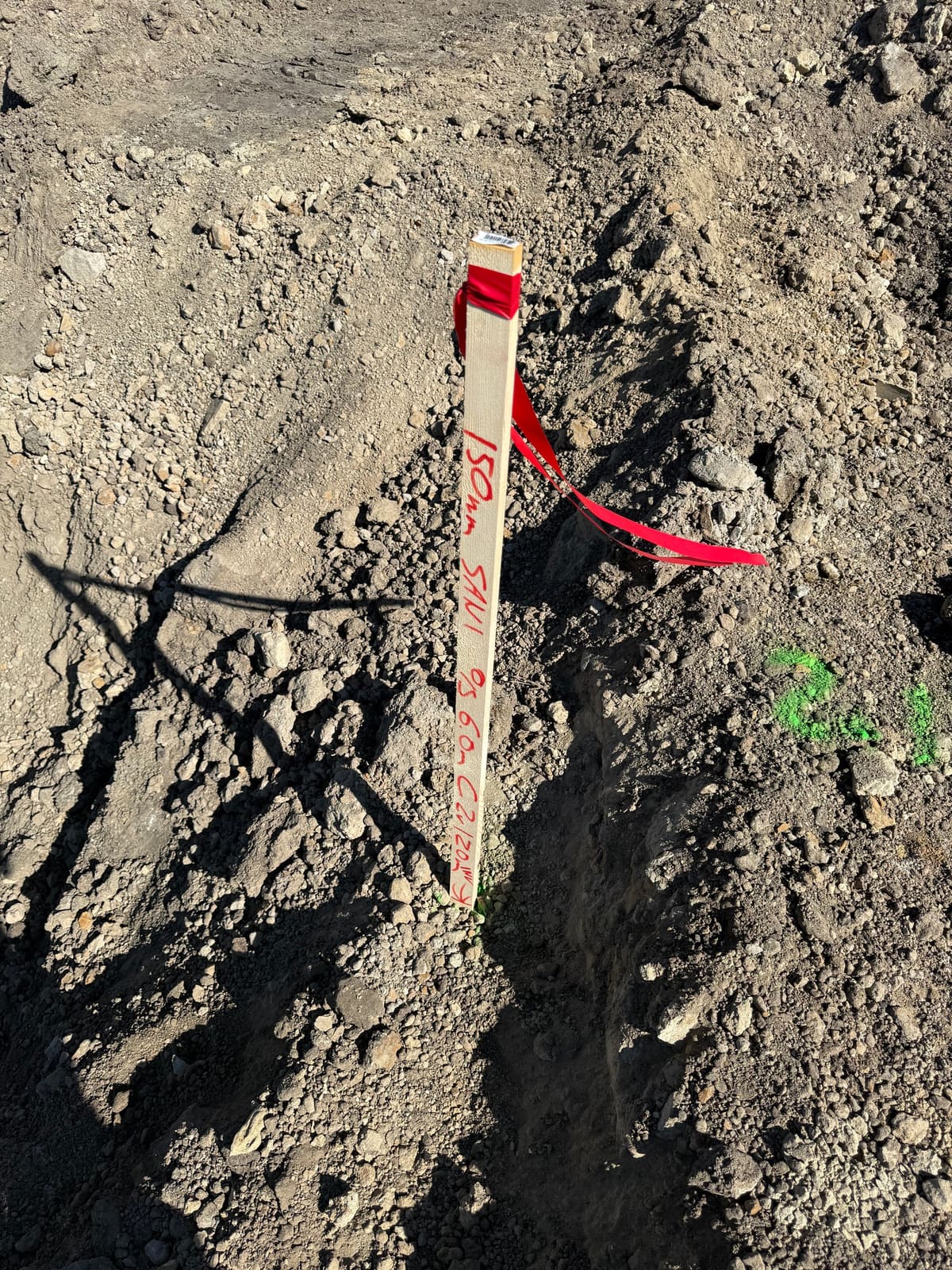
Then the footings: corners, centrelines, anchor bolt patterns and top-of-concrete elevations, staked from the structural drawings and checked before the pour. Stakes get hit, every active site does it, and re-staking as the work advances is part of the job, not an extra.
Up the structure
Above grade the tolerances tighten. Gridlines, column centres, embeds, sleeves and edge-of-slab are laid out on each deck, usually with a robotic total station working alongside the formwork crew while a crane runs overhead.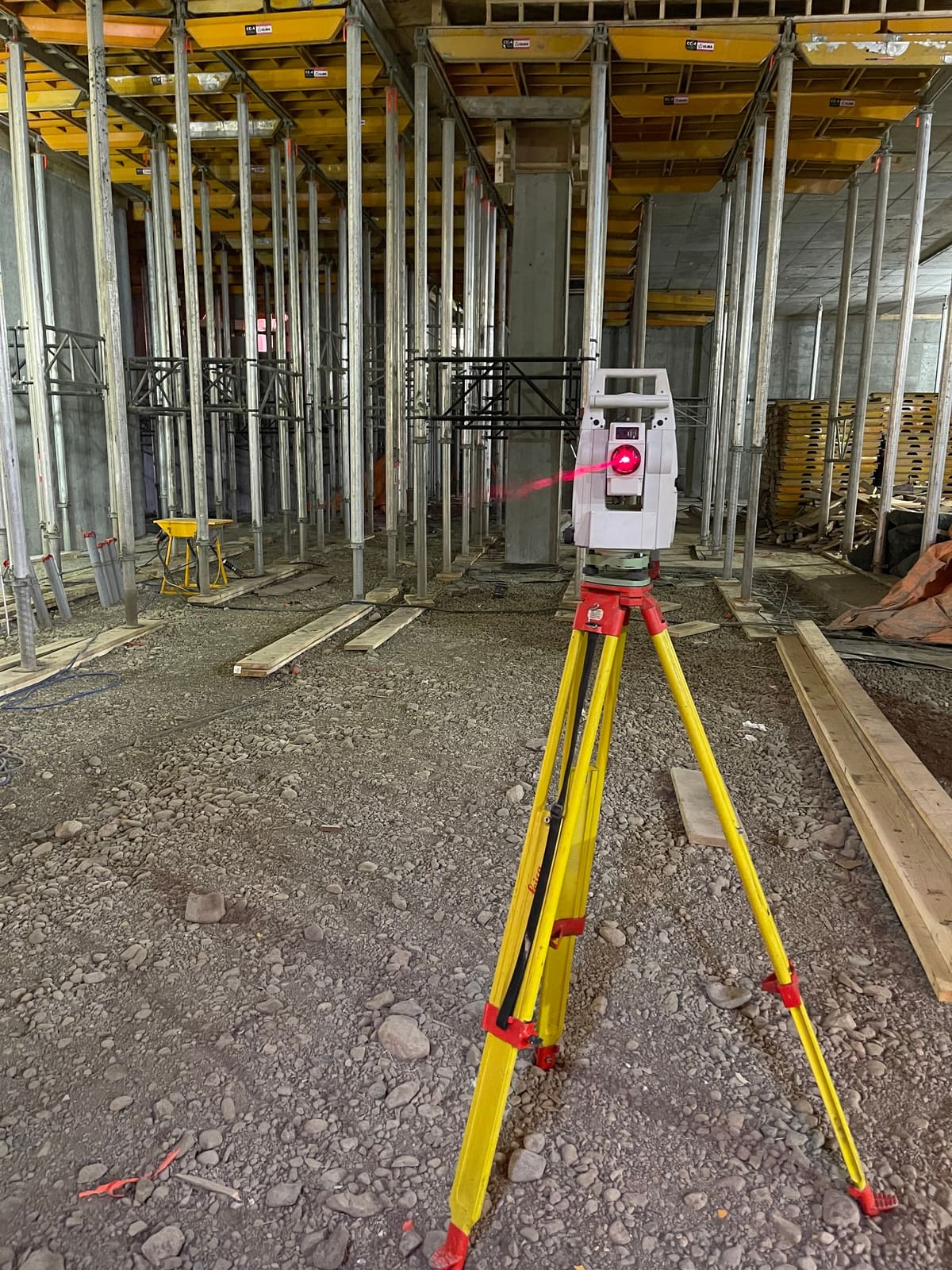
A layout error at the third floor is discovered at the tenth, when it costs the most. PCI verifies as it lays out, checking the previous pour against design before staking the next, so drift is caught while it is still a conversation rather than a change order.
Roads, curbs and services
Civil work has its own rhythm: curb and gutter, catch basins, sewer and water inverts, subgrade and pavement. It is layout measured in millimetres of grade over hundreds of metres of run, and it happens beside live traffic more often than not.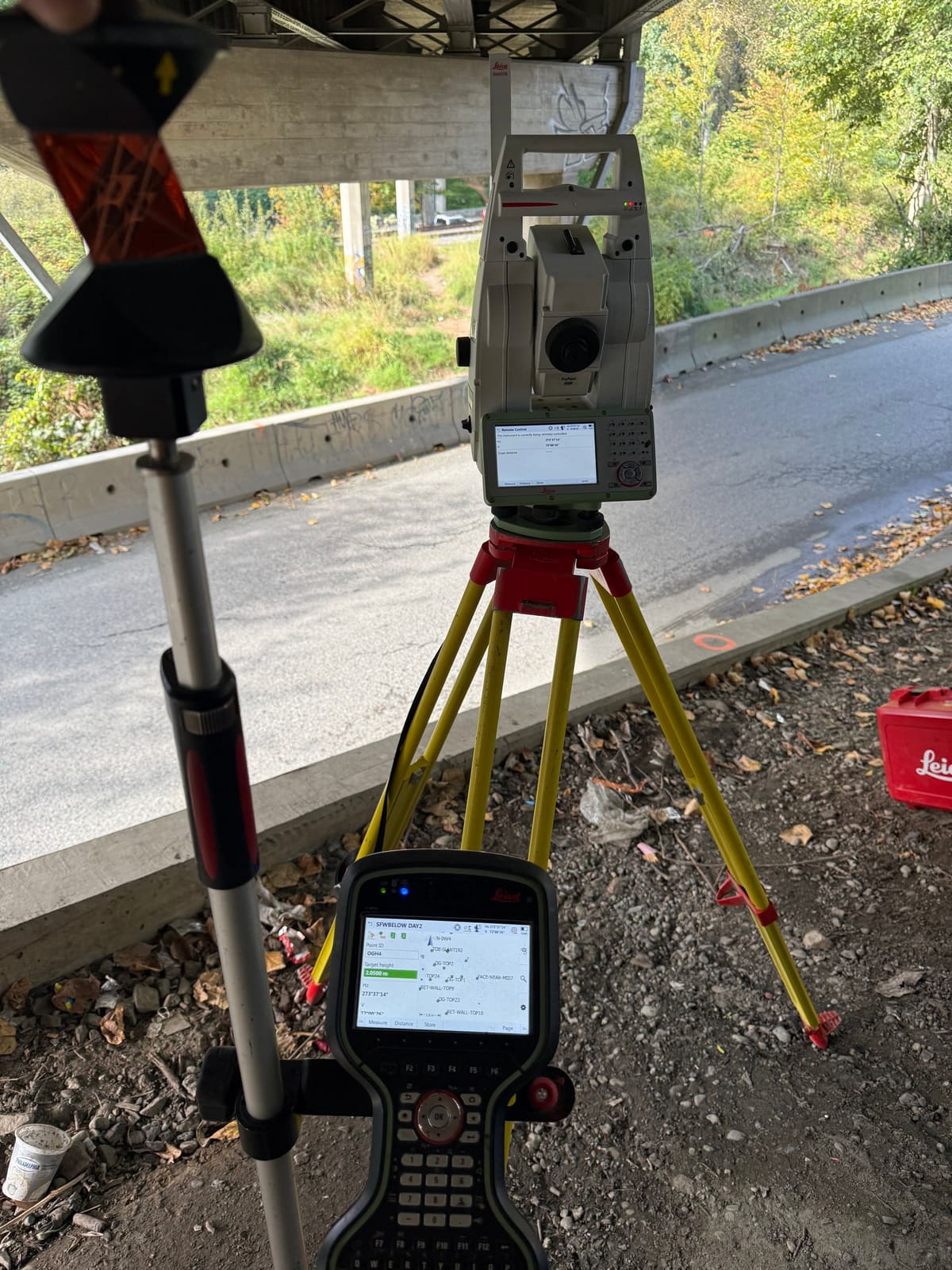
Invert elevations are checked before the pipe is buried, curb lines are staked with offsets the concrete crew can actually work from, and the finished surface is picked up for the as-built while it is still accessible.
Big infrastructure, same fundamentals
Guideways, bridges, plants and terminals scale everything up: longer baselines, tighter control, more trades building off the same marks. But the fundamentals do not change. Control, layout, verify, record.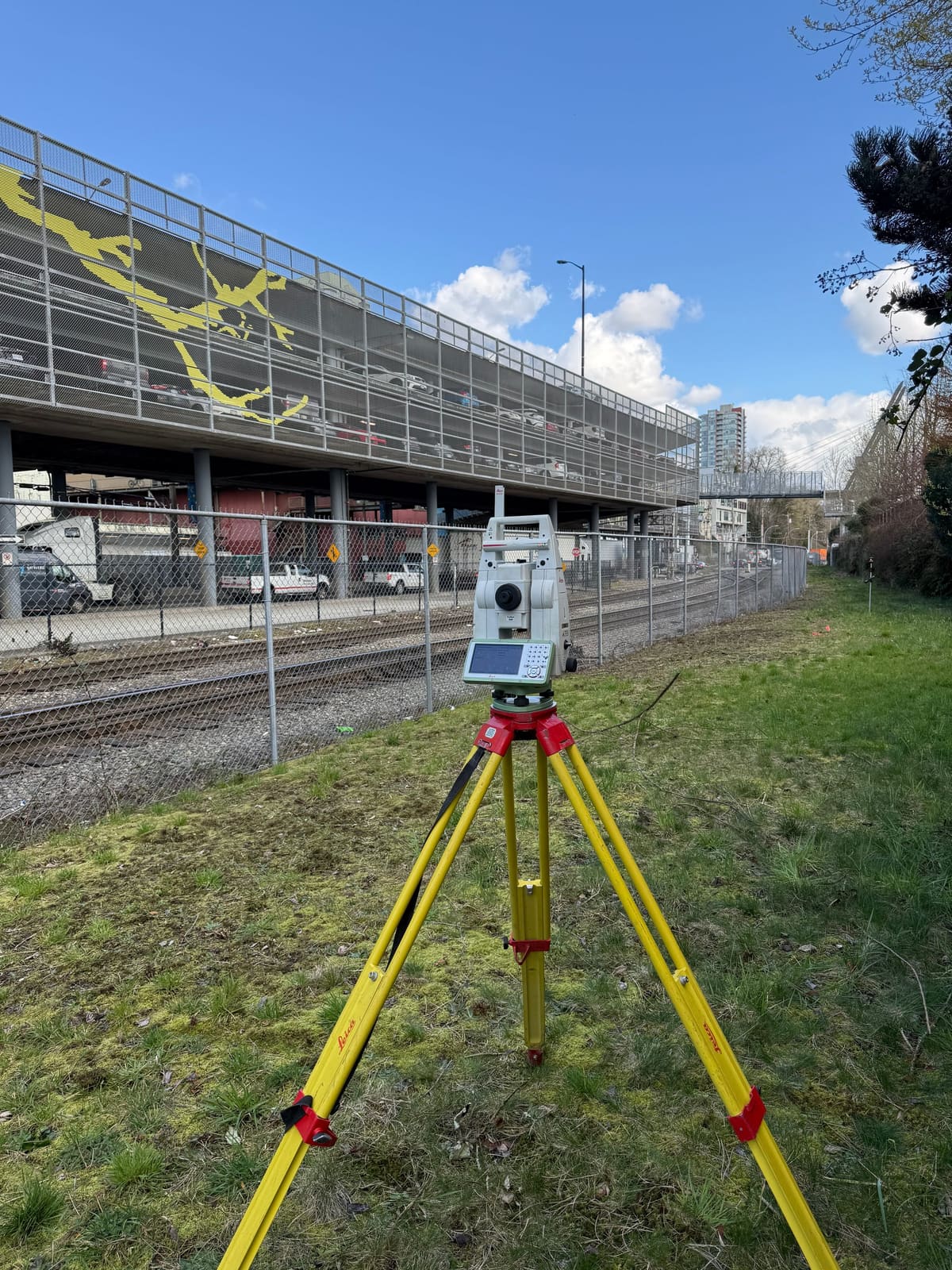
What changes is coordination. On a large site the survey crew is the common reference for everyone, and PCI runs it that way: one control network, one coordinate system, one set of current marks, with re-stakes and checks tracked so every trade knows what it is building from.
In whatever the sky is doing
Construction does not stop for weather, and neither does layout. Crews work in rain, wind, dust and short winter light with equipment built for it and procedures that keep accuracy up when conditions are down.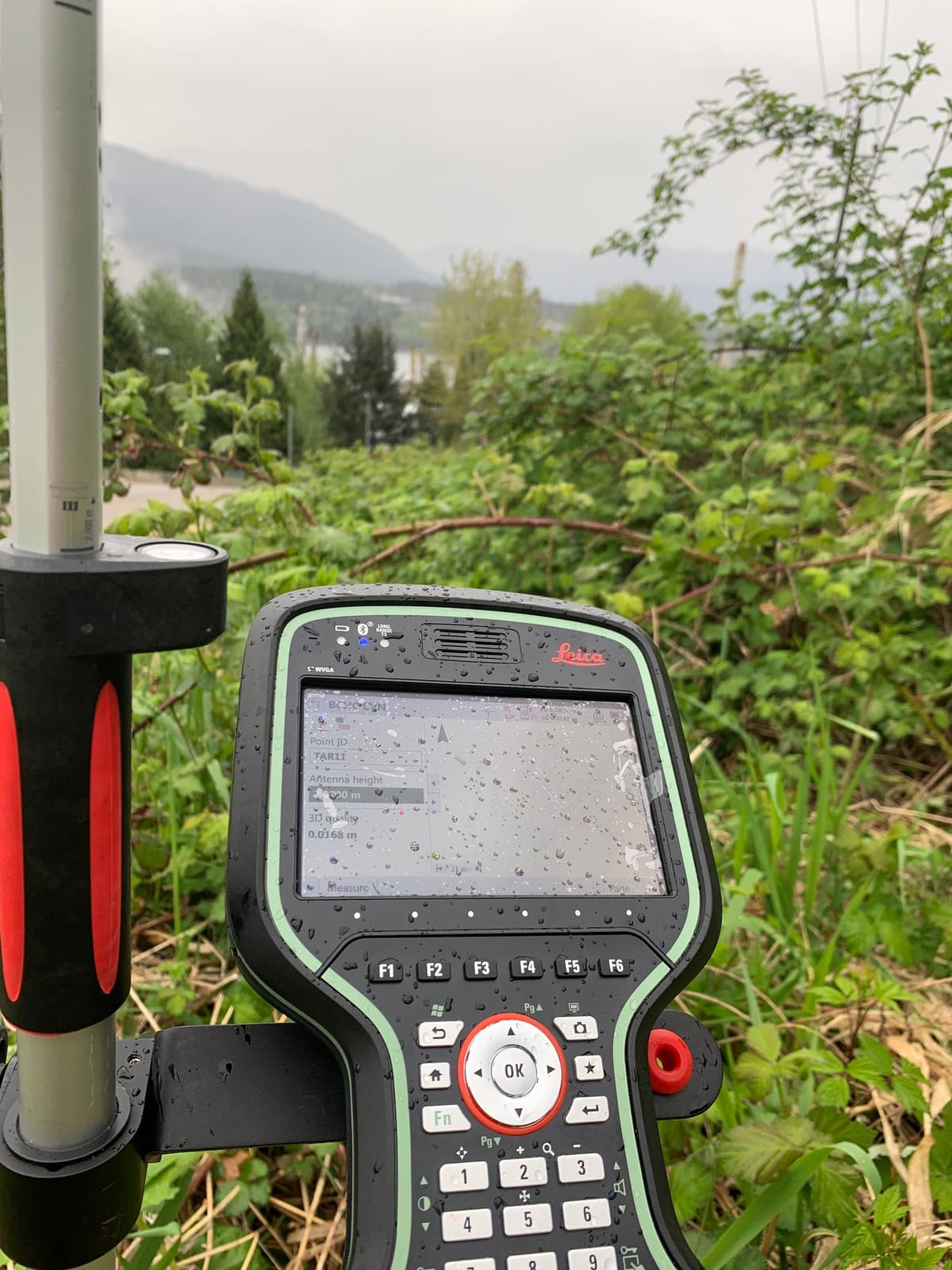
As-built: the survey that closes the job
When the work is in, the last survey records what was actually built: foundations, structure, underground services before backfill, finished grades and surfaces. The as-built is compared to the design, and the differences are documented.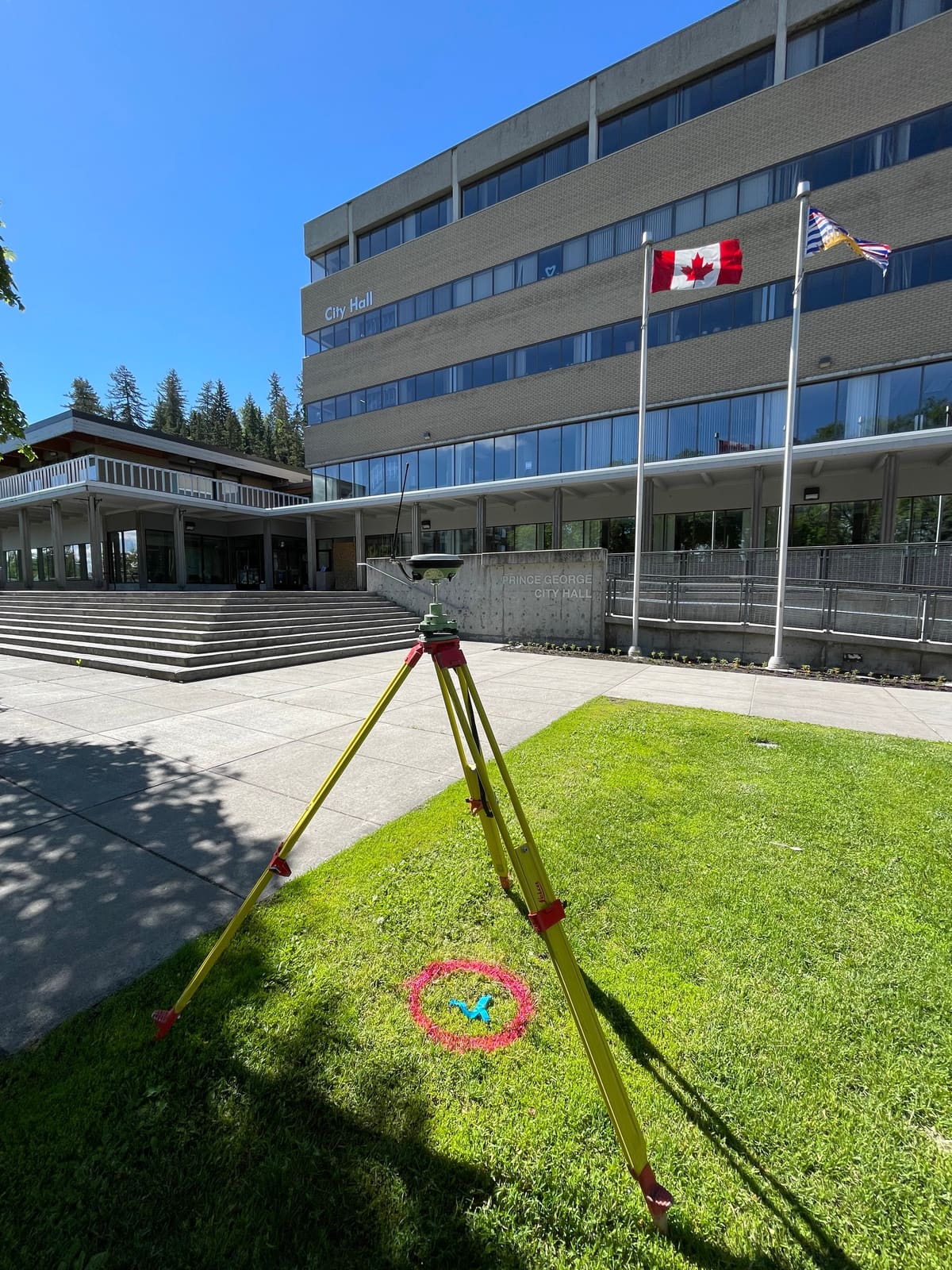
That record is what the owner operates from, what the engineer certifies against, what the municipality accepts, and what the next contractor digs beside in fifteen years. PCI treats the as-built as the final deliverable of construction surveying, and it is planned from the first day, not remembered on the last.
Working across BC, Alberta and the Yukon
PCI Surveys is First Nations-owned. Construction projects across the north carry Indigenous participation commitments more often every year, and on those projects PCI delivers a defined technical scope, survey done properly, not a name on a proposal. More on our First Nations partnerships page.Construction survey services
Site control networks · clearing and early-works layout · grade and cut/fill staking · foundation, anchor bolt and gridline layout · deck, embed and column layout · curb, gutter and underground services layout · verification and re-staking · as-built surveys · utility locating ahead of excavation.
Related: construction surveying, construction layout and staking, as-built surveys, construction surveying in northwest BC, and crews in Prince George, Edmonton, Vancouver and Whitehorse.
Get a price for construction surveying
Send the drawings, ideally the IFC set, with the location and schedule, and tell us which stages you need covered. In most cases you will see a price as soon as you submit.Request a quote or call the office nearest your project. Crews are out seven days a week, 6 a.m. to 7 p.m.


