November 28, 2026 · Locating Services, Line Locating Company, Line Utility Locating
Line Locating in BC and Alberta: Edson and Hinton to Valemount and Prince George
Private utility locating, pipeline and facility line locating, ground penetrating radar and locate mapping, on both sides of the provincial border.
Line locating services in BC and Alberta
PCI Surveys locates and marks buried utilities before the ground is opened: power, gas, water, sewer, communication lines and everything else that runs under a site. The work covers private lines that the one-call ticket does not, on farms, acreages, commercial lots, mills, plants, lease sites and construction projects.Every locate ends with clear marks on the ground and a record of what was found. Because PCI is also a survey company, the marks can be surveyed and delivered on a drawing, tied to the same control as the rest of the project.
Buried lines we locate
Power and lighting. Secondary electrical services, feeders between buildings, yard and parking lot lighting, and lines to pumps, gates, signs and outbuildings.
Gas and fuel. Private gas lines beyond the meter, propane lines, and fuel lines between tanks, dispensers and equipment.
Water, sewer and storm. Water services, hydrant leads, irrigation, sanitary and storm lines, septic lines and fields, culverts and drain tile.
Communication. Telephone, cable, fibre, and control and instrument lines.
Pipelines and facility lines. Flow lines, gathering lines and plant piping on lease sites and industrial yards, located ahead of ground disturbance.
Unknown and abandoned lines. Sweeps of the work area for lines that are not on any drawing, plus buried tanks, vaults and old foundations found with ground penetrating radar.
Locating equipment and methods
Electromagnetic locating. A transmitter puts a signal on the line and the receiver follows it across the site, for metallic pipe and cable and for any line with a tracer wire.
Ground penetrating radar. GPR finds lines that carry no signal, including plastic and concrete pipe, and picks up tanks, voids and other buried objects.
Sondes and sewer cameras. A sonde or a camera with a sonde is pushed through sewer, storm and conduit runs so the route can be traced and marked from the surface.
Passive sweeps. The whole work area is swept for live power and other signals, so lines nobody knew about are found before the excavator finds them.
Concrete scanning. Slabs, walls and floors are scanned for rebar, conduit and post-tension cable before coring or cutting.
Marks, sketches and locate mapping
Lines are marked with paint, pin flags and lath in the standard utility colours, with line type and estimated depth where the signal allows. In winter the marks are set so they stay readable in snow.Each job comes with a locate sketch and field notes for the excavation file. When the project needs more, the marks are surveyed with GNSS or total station and delivered as a CAD drawing, a PDF plan or a file for the excavator's machine control, so the located lines sit on the same drawing as the design.
Line locating for pipeline and oil and gas work
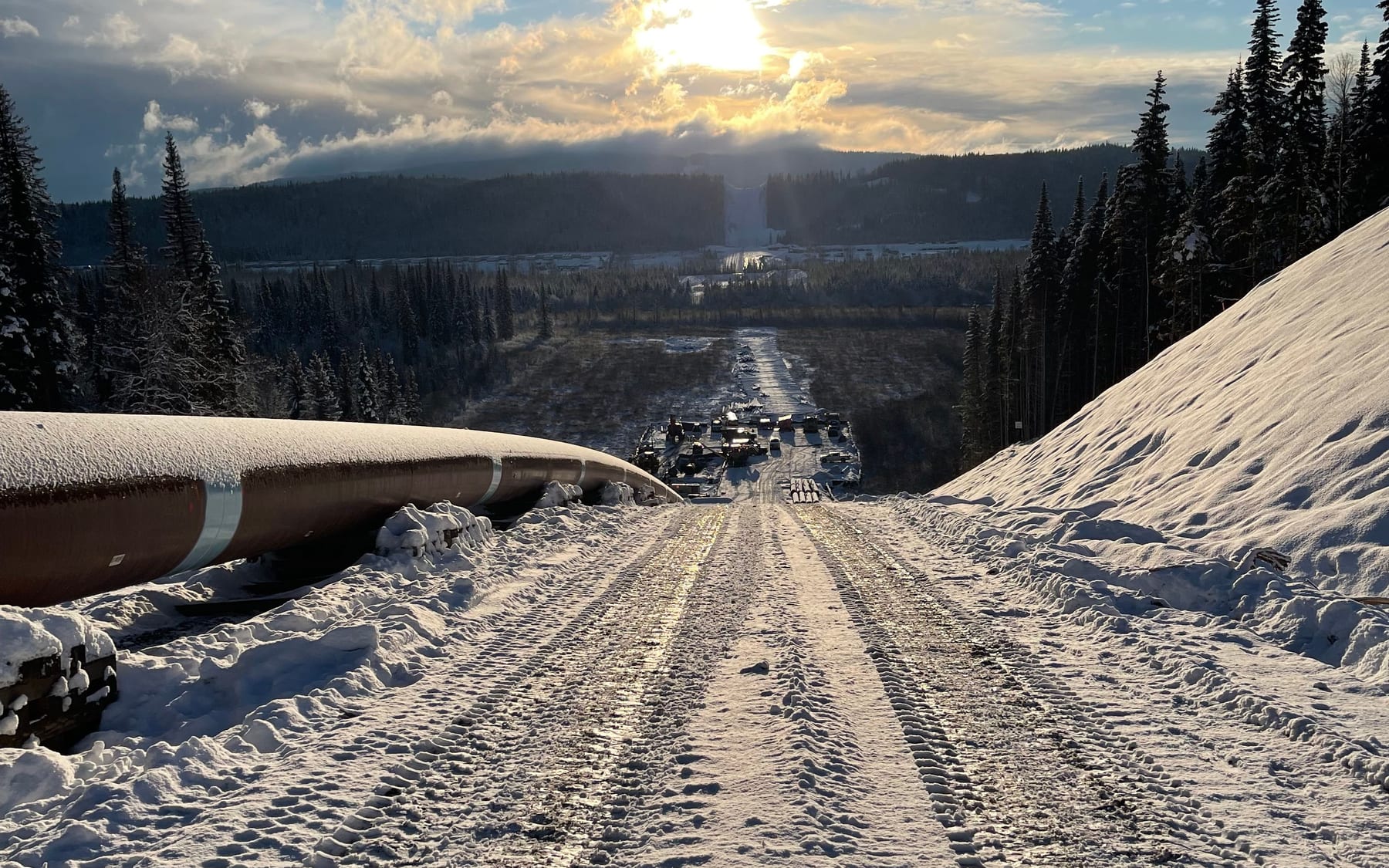
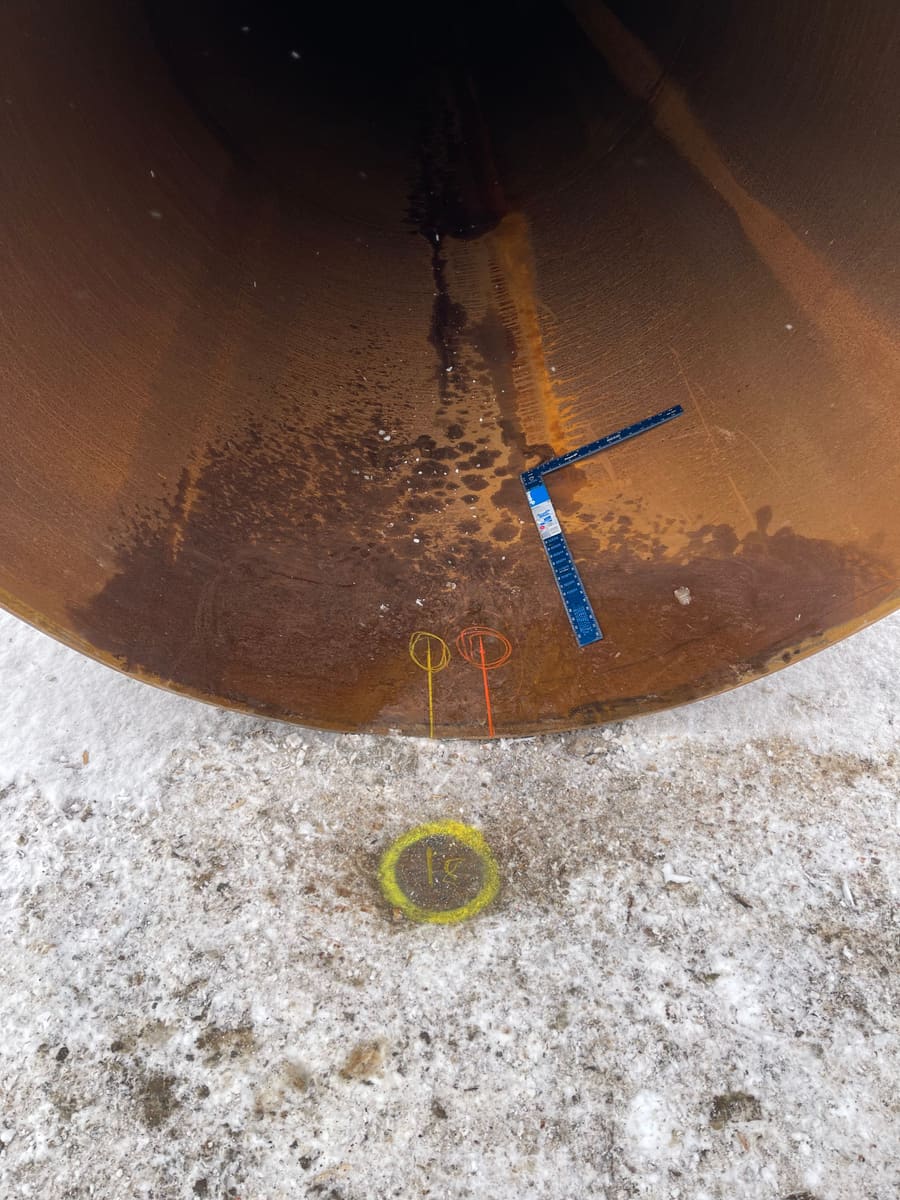
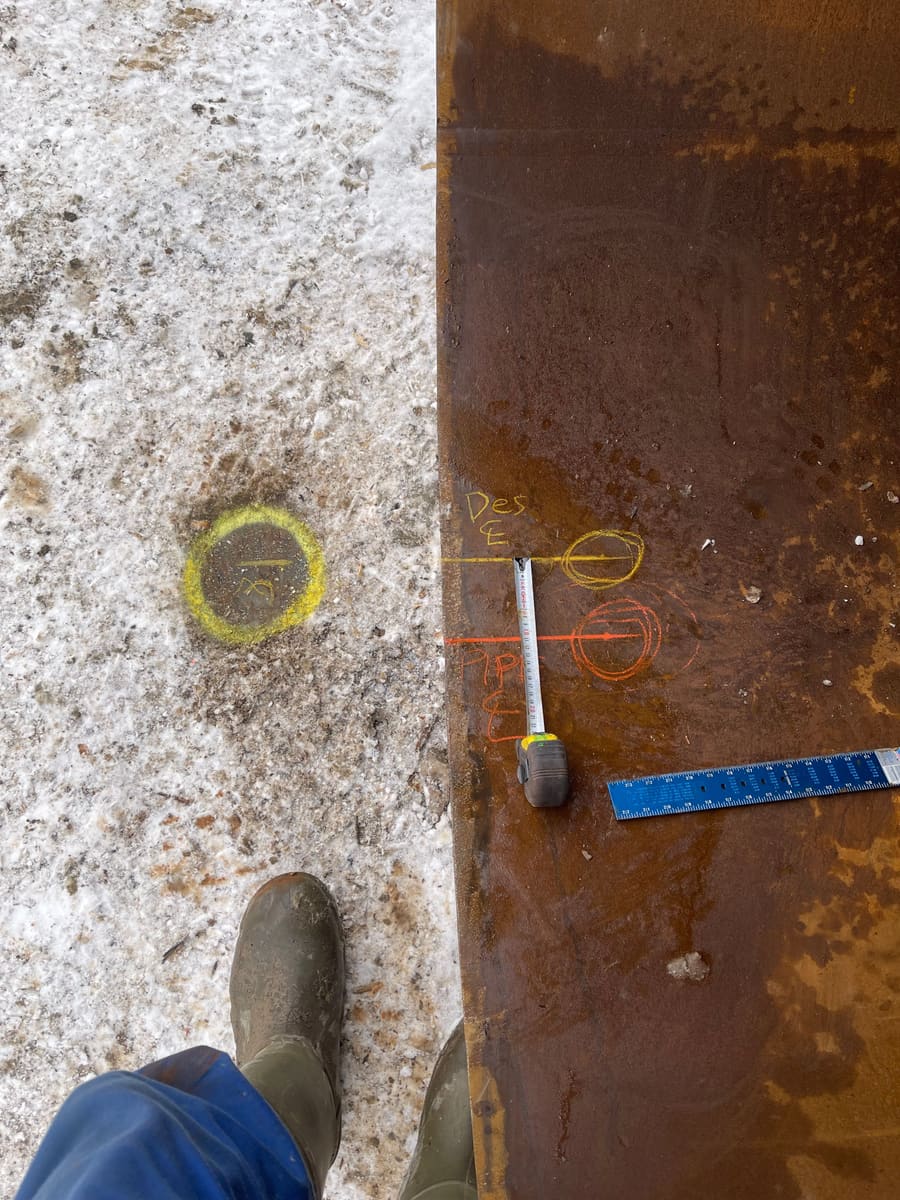
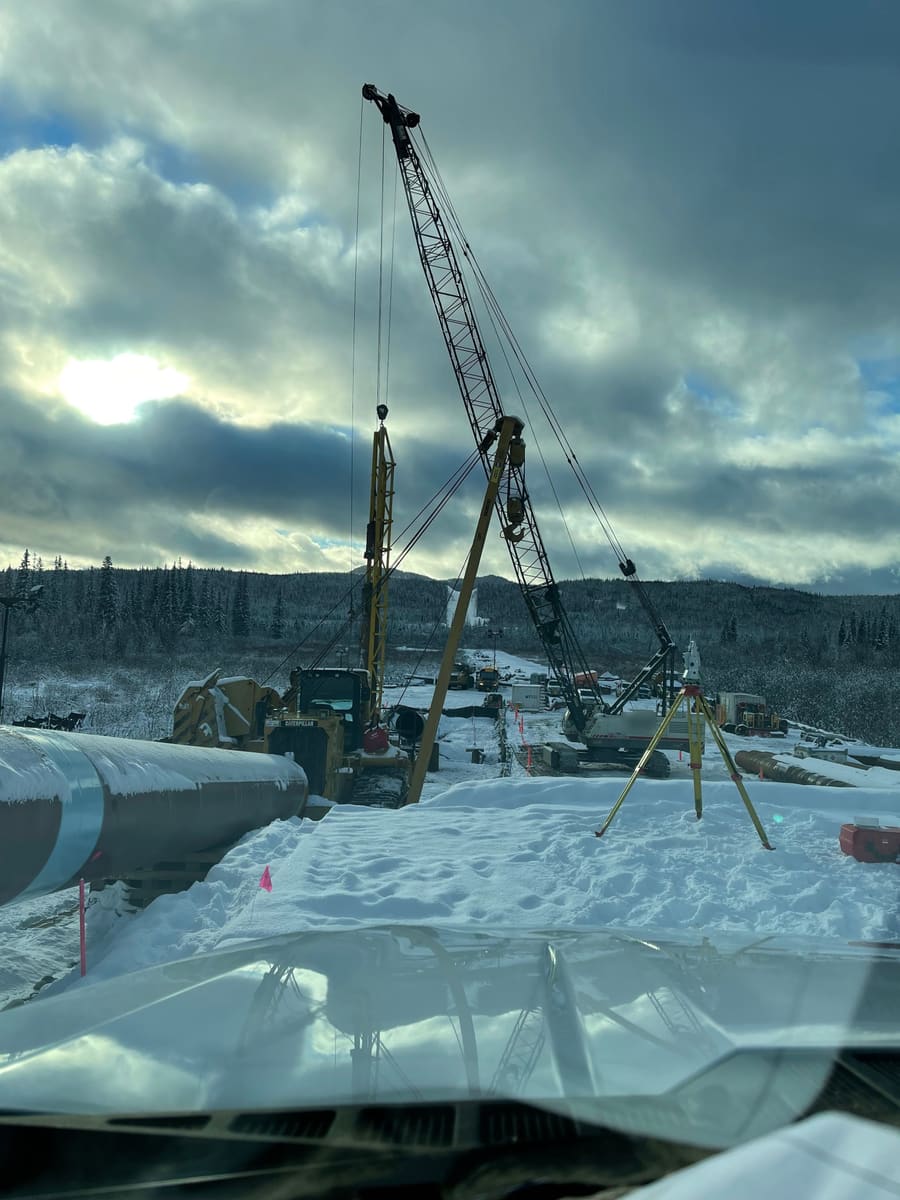
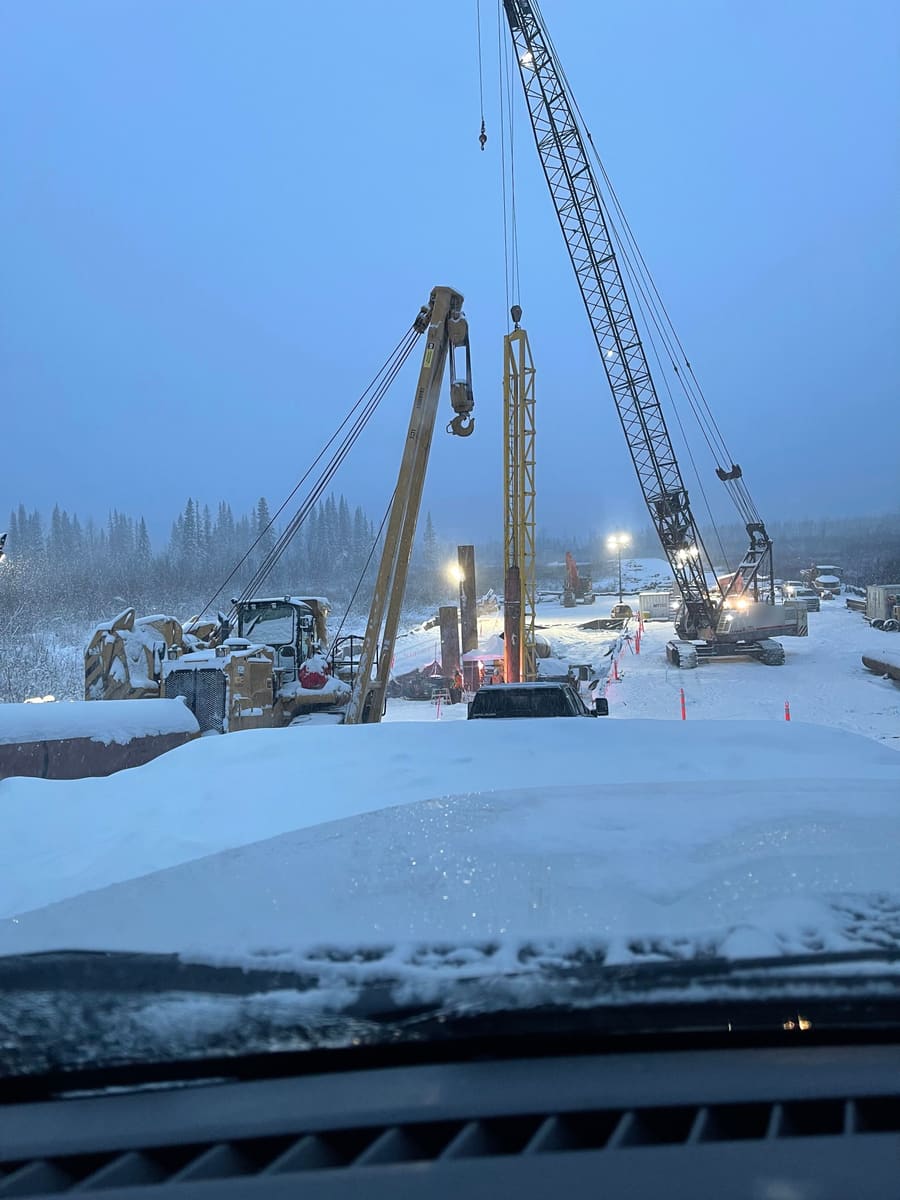
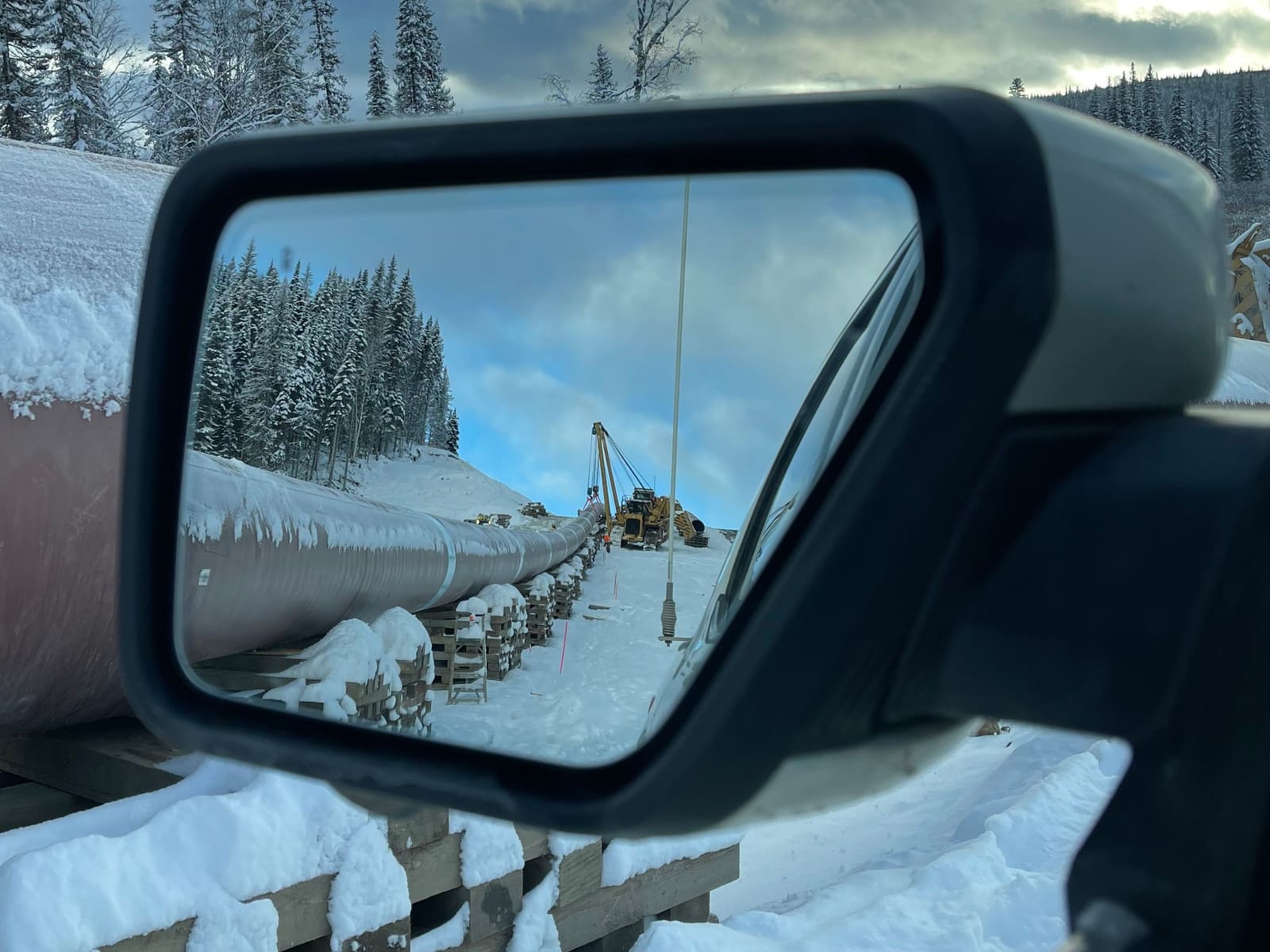
Between Edson, Hinton, Valemount and Prince George, much of the locating work is tied to pipelines: new construction beside lines that are already in service, and maintenance digs on the lines themselves.Existing pipelines and crossings. Lines that cross or run beside a new right-of-way are located, marked and flagged ahead of clearing, grading and ditching, and the crossing points are surveyed for the crossing agreements and the as-built.
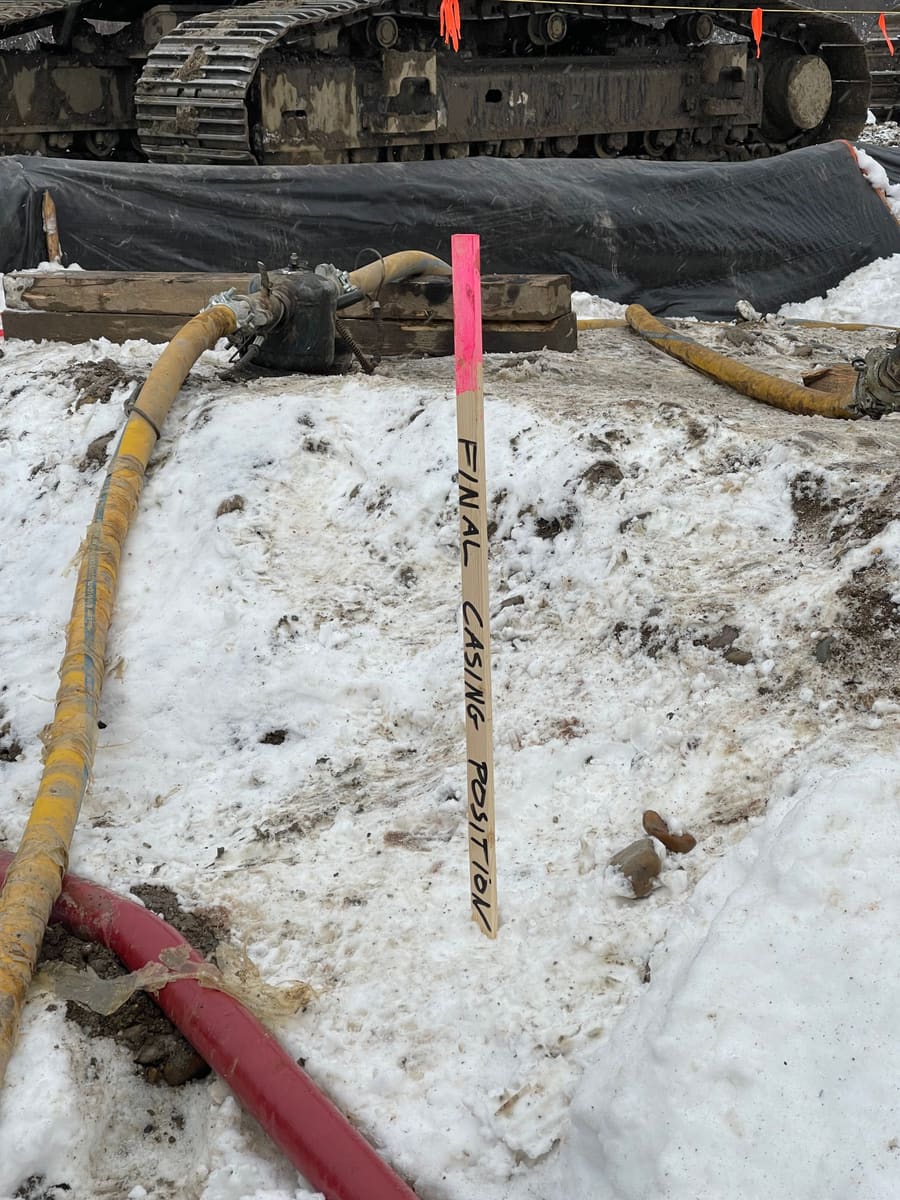
Bored and drilled crossings. Buried lines are located at the entry and exit points and along the bore path under roads, rail and watercourses. Casing and carrier pipe positions are staked and recorded as the crossing is built.
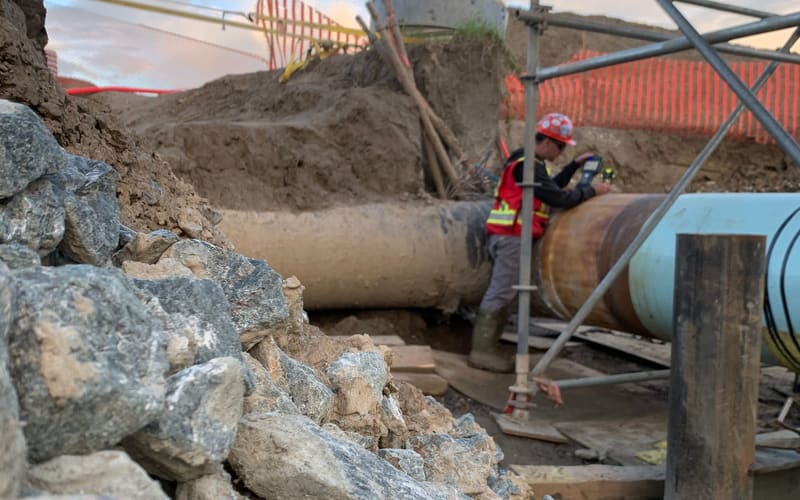
Exposures. Located lines are marked for the hydrovac crew, then surveyed once they are exposed, with position, depth and top of pipe recorded.
Lease, plant and station sites. Flow lines, electrical, instrument and communication lines located ahead of tie-ins, expansions and maintenance work.
Survey services for the pipeline itself are covered in pipeline and oil and gas surveys in BC and Alberta.
The Yellowhead corridor: Edson and Hinton to Valemount and Prince George
The country along the BC and Alberta border between Edson and Prince George is a long way from either city, and it carries a great deal underground. The highway, the railway, transmission pipelines, fibre optic lines and power lines all share the same valleys, and the towns, mills, plants and rural properties along the way each have their own private lines. PCI works the corridor from both ends, with locators based in Edmonton and Prince George.Edson and Hinton. Well sites, lease roads, compressor stations and gathering lines, mill and plant sites, forestry yards, and commercial and residential lots in both towns. Locates here are often part of a ground disturbance program, with crossings of existing pipelines and power lines to be found and documented.
Jasper, Valemount and McBride. Lodges, campgrounds, commercial lots, rural properties and highway and rail projects through the mountains and the Robson Valley. Many properties run on private water, septic and power lines that were never drawn, which is where a full sweep with the locator and GPR matters most.
Prince George. Private line locating in Prince George covers mill and industrial sites, commercial and institutional properties, subdivisions and acreages, and the highway corridors east and west of the city.
Remote sites, winter conditions and long drives between jobs are a normal part of the work on this corridor. Locates can be booked for one visit or grouped along the highway so several sites are covered in a single trip.
One-call tickets on both sides of the border
In Alberta, the one-call request goes through Utility Safety Partners. In BC, it goes through BC 1 Call. Both notify the member utilities, who mark their own lines up to the meter or the property line. PCI works alongside the ticket on either side of the border and locates what it leaves out: private lines on the property, lines between buildings, and anything the owner installed.On a project that crosses the border, or a client with sites in both provinces, that means the same locate standard, the same sketches and the same drawing format on every site.
Who we locate for
Excavation and civil contractors. Locates ahead of trenching, grading, servicing, piling and fencing.
Drilling and environmental consultants. Clearances at boreholes, test pits and monitoring wells. More on locates for drilling and excavation.
Oil and gas and pipeline companies. Lease, plant and right-of-way locates, pipeline crossings and tie-ins.
Mills, plants and industrial sites. Yard and plant locates ahead of maintenance, shutdown and expansion work.
Municipalities and utilities. Private-side locates, utility mapping and as-built surveys of located lines.
Farms, acreages and property owners. Power, water, gas and septic lines located before a shop, a fence line, a new service or a dugout goes in.
Ground disturbance support
Industrial sites and larger projects need more than a single locate. PCI provides ground disturbance support: locating and GPR ahead of the work, documentation for the ground disturbance permit, re-marking as the job moves, and a surveyed record of the lines and crossings that were exposed.Line locating across the rest of BC and Alberta
Alberta. Edmonton, Sherwood Park and the Industrial Heartland; Red Deer and central Alberta, west to Rocky Mountain House and Nordegg; Grande Prairie and the Peace Country; and north to Fort McMurray and High Level. More in our post on line locating in Alberta.
British Columbia. Prince George and the central interior, Vanderhoof to Smithers, Terrace, Kitimat and Prince Rupert, Fort St. John and Dawson Creek, and Vancouver and the Lower Mainland.
PCI Surveys works from offices in Prince George, Edmonton, Vancouver and Whitehorse. It is a First Nations owned company, and details for projects with Indigenous procurement or participation requirements are on our First Nations partnerships page.
Line locating services
Private utility locating · electromagnetic line locating · ground penetrating radar · sonde and sewer camera locating · passive sweeps for unknown lines · borehole, test pit and monitoring well clearances · pipeline and facility line locating · ground disturbance support · concrete scanning · buried tank and vault detection · locate sketches and reports · GNSS survey of located lines · utility mapping and CAD drawings · as-built surveys of exposed lines.
Related: private line locating, private utility line locating for excavation and site work, pipeline and oil and gas surveys in BC and Alberta, utility locating questions and answers, GPR scanning in Prince George, and the Edmonton and Prince George pages.
Book a line locate
Tell us where the site is, what work is planned and when. Outline the dig area on the map or attach a site plan, and in most cases you will see a price as soon as you submit. For a program of sites or a full project package, send it through submit an RFP.Request a quote or call the office nearest your project. Crews are out seven days a week, 6 a.m. to 7 p.m.