
Utility Locating & GPR
Sewer Camera & Sonde Locating
Camera inspection and sonde tracing of sewers, drains and ducts — locate non-conductive lines and see their condition from the inside.
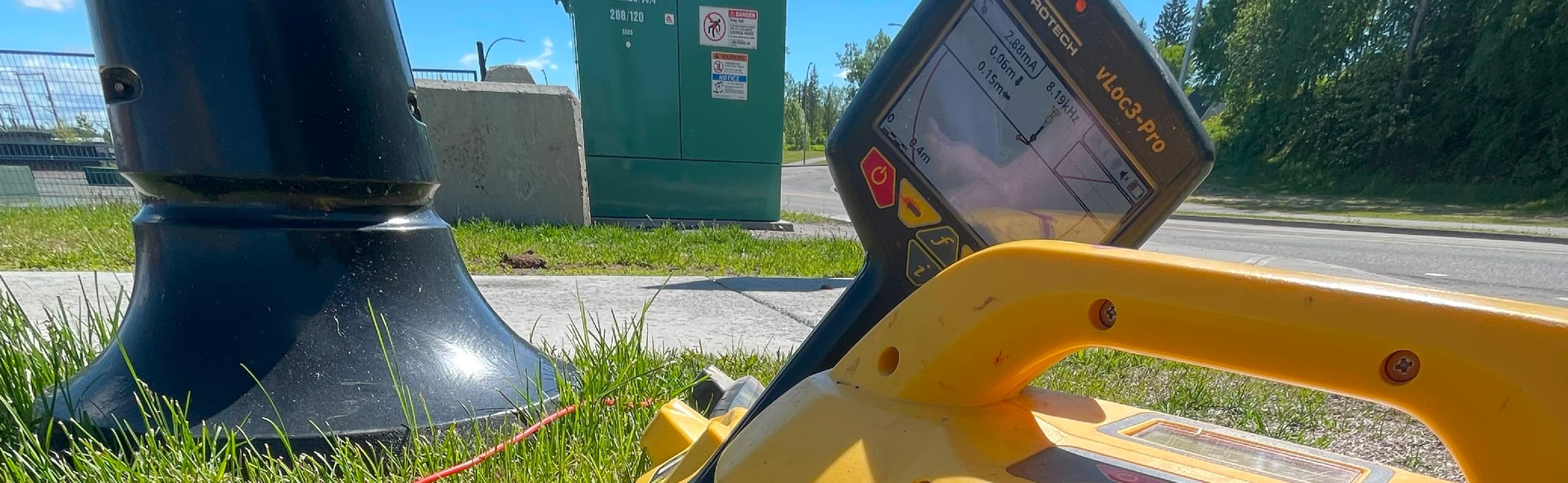
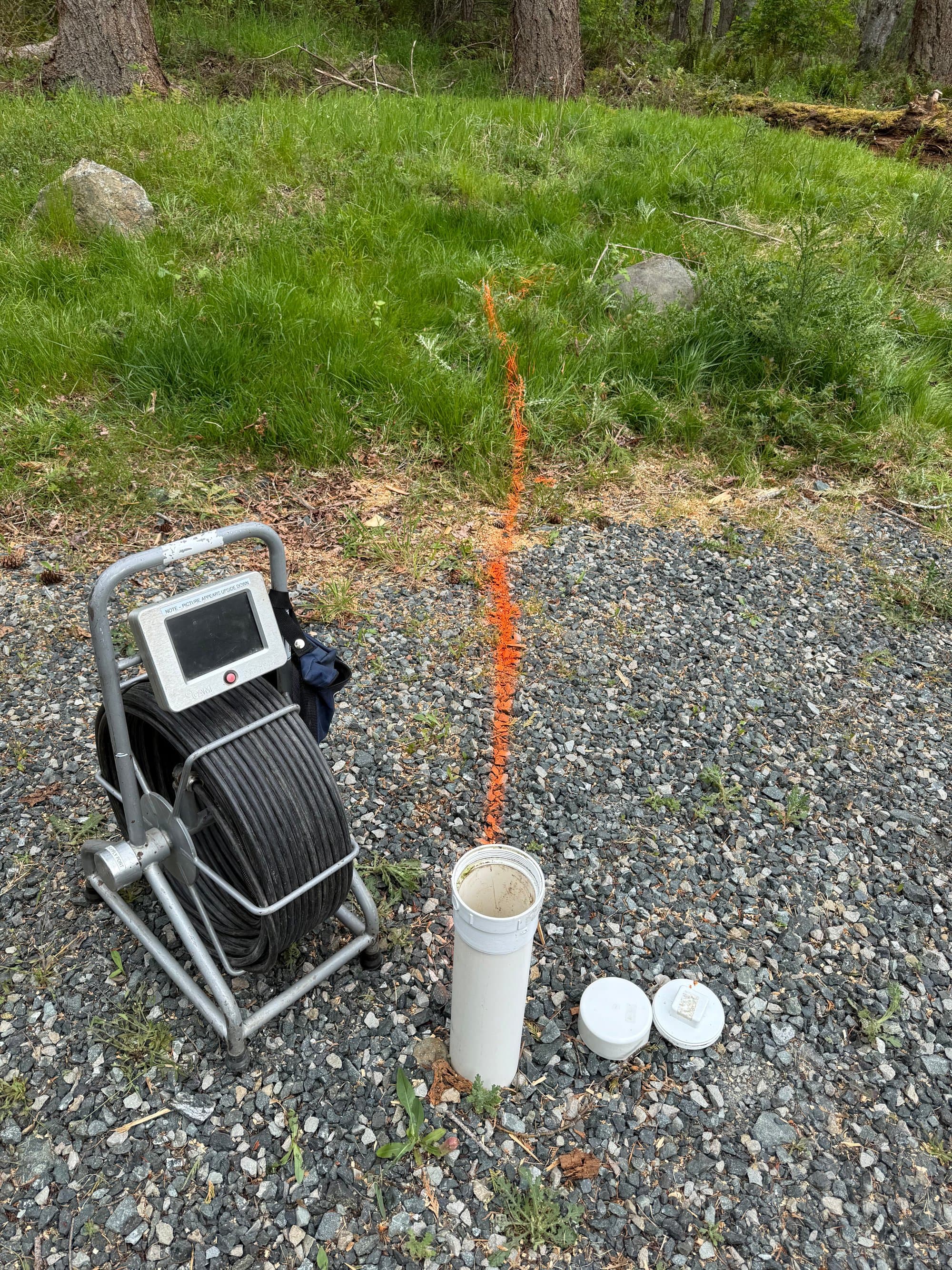
Plastic and clay pipes can't be traced with standard electromagnetic locating — but push a camera with a sonde transmitter through them and we can follow the line from the surface, mark its path and depth, and record its condition along the way.
PCI Surveys uses sewer cameras and sondes to trace sanitary and storm services, septic lines, culverts, conduits and ducts across BC, Alberta and the Yukon — often the only practical way to map older or undocumented services.
What PCI Performs
- Sewer and storm line camera inspection
- Sonde tracing of non-conductive pipes
- Septic and drainage line locating
- Duct and conduit tracing
- Blockage and break location
- Depth and alignment mapping of traced lines
When You Need It
- When plastic or clay services must be located
- Before excavating near old or undocumented drains
- When a blockage or break needs to be found precisely
- When ducts or conduits need tracing between structures
Who Uses It
- Excavation and utility contractors
- Plumbers and drain contractors
- Property managers and homeowners
- Municipalities and facilities
Deliverables
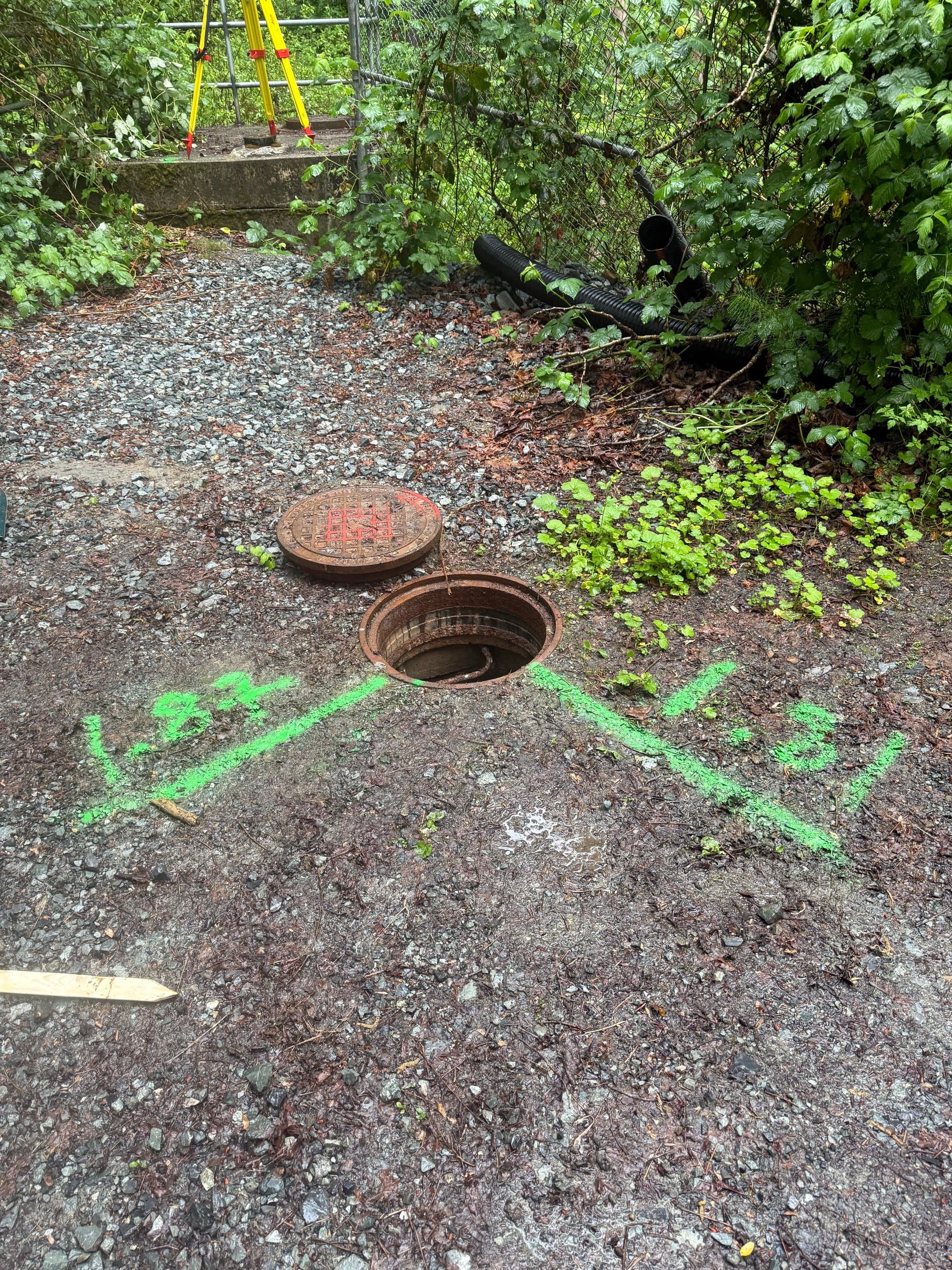
- Surface markings of traced alignments and depths
- Inspection video and condition notes
- Located blockage/break positions
- Mapping integrated with locate reports
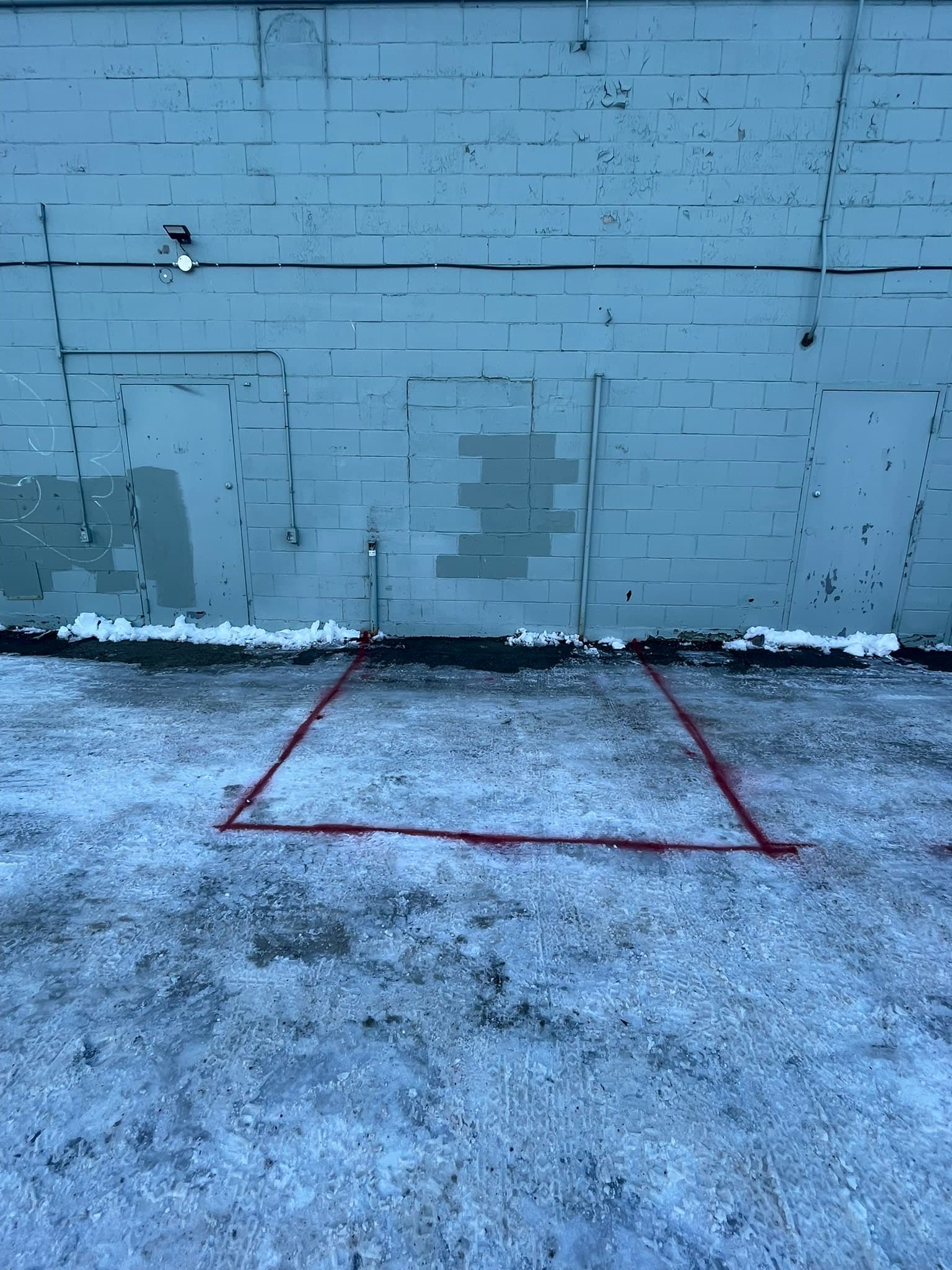
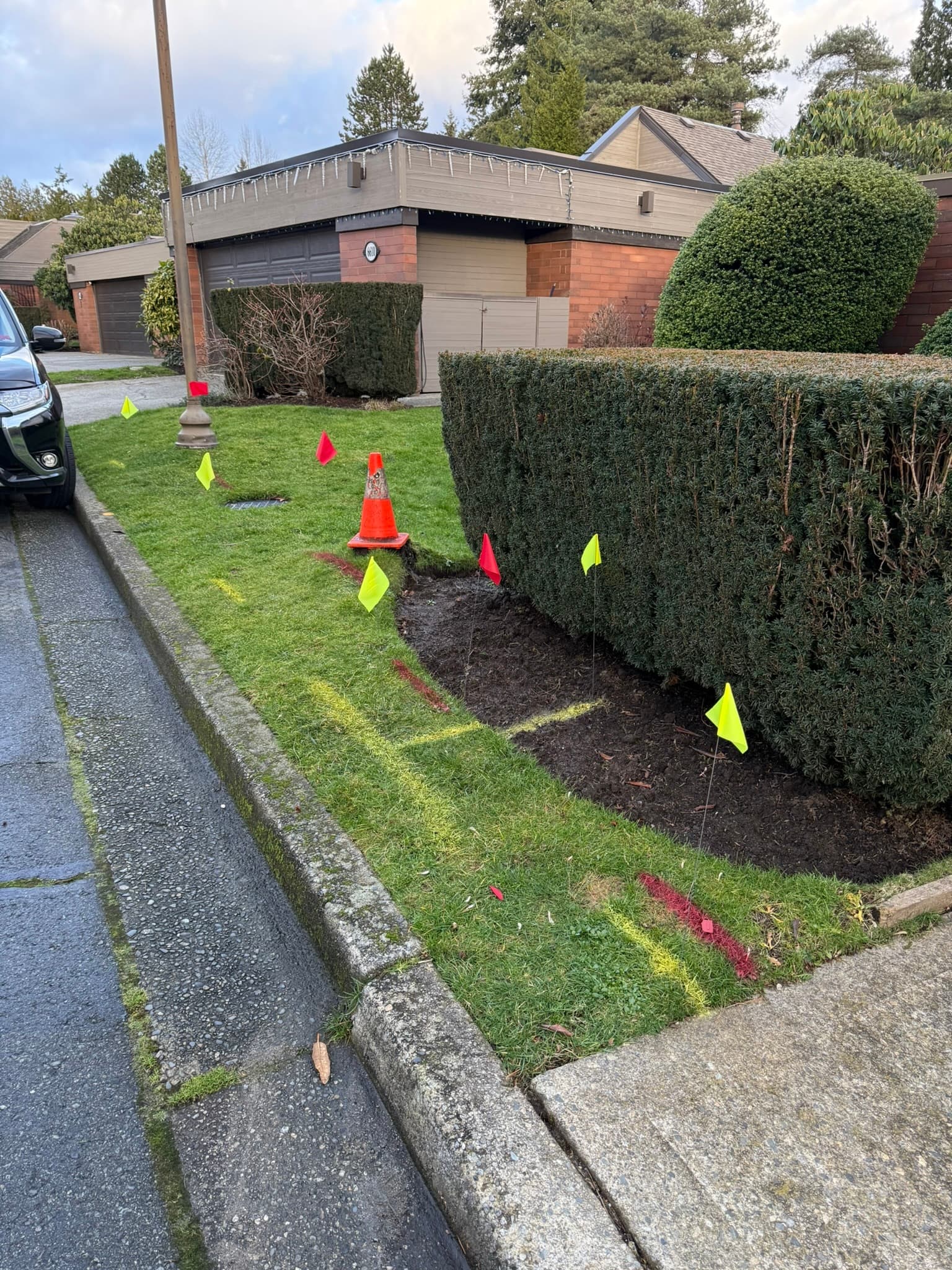
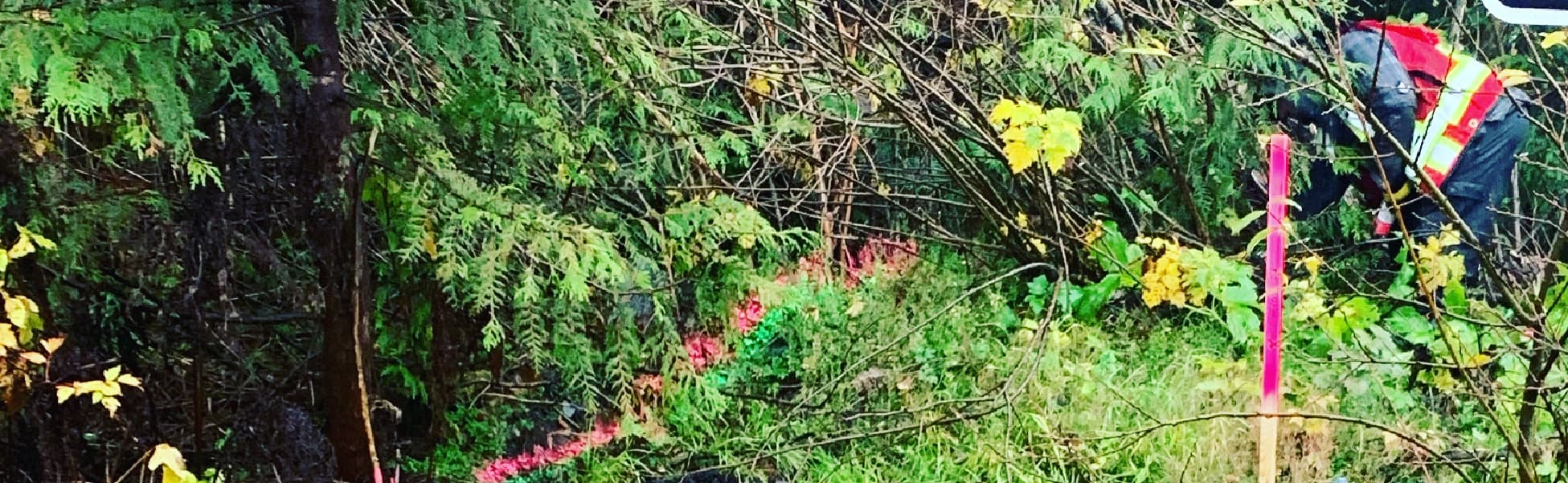
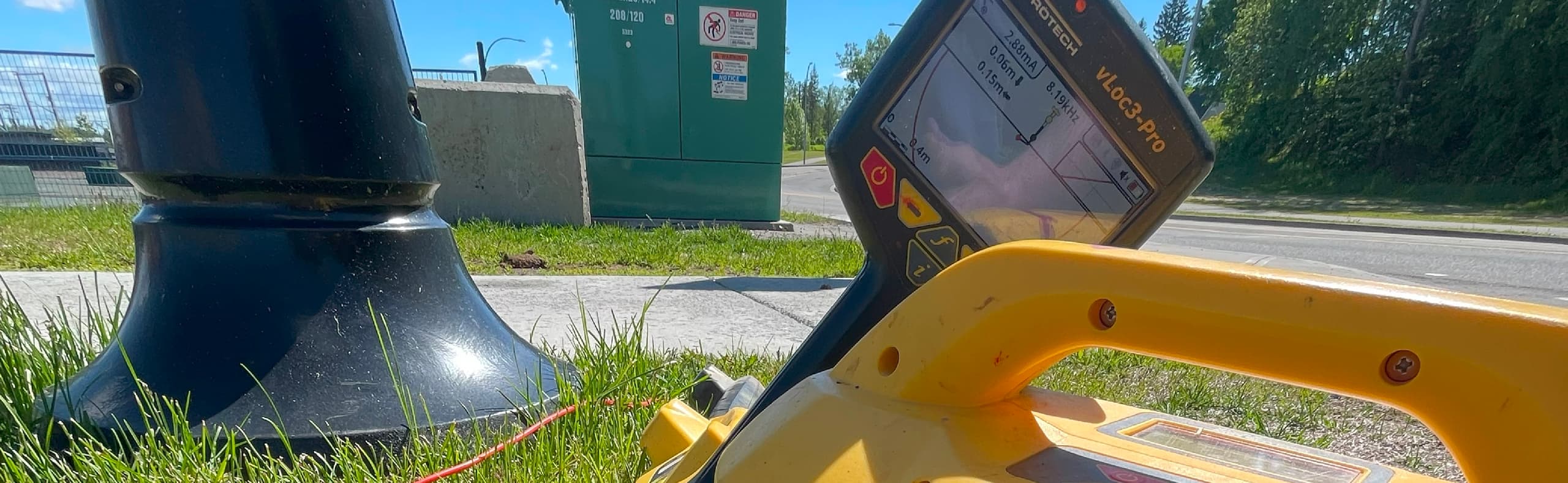
PCI In The Field
Real crews. Real sites.
Common Questions
Camera & Sonde FAQs
What is a sonde and how does it work?
A sonde is a small transmitter we push through the pipe. From the surface we pinpoint its signal, mapping the line's path and depth — no matter what the pipe is made of.
What can a sewer camera inspection find?
Breaks, cracks, root intrusion, sags, blockages, offset joints and cross-connections — plus the overall condition of the line, recorded on video.
Can you locate plastic or clay pipes?
Yes. Because the sonde travels inside the pipe, camera and sonde locating works on PVC, HDPE, clay and concrete lines that surface locators can't detect.
When should I book a camera and sonde locate?
Before excavating near buried services, when purchasing property, ahead of renovations that tie into existing lines, or any time a drain problem keeps coming back.
Related Services
Often Booked Together
Private Utility Locating
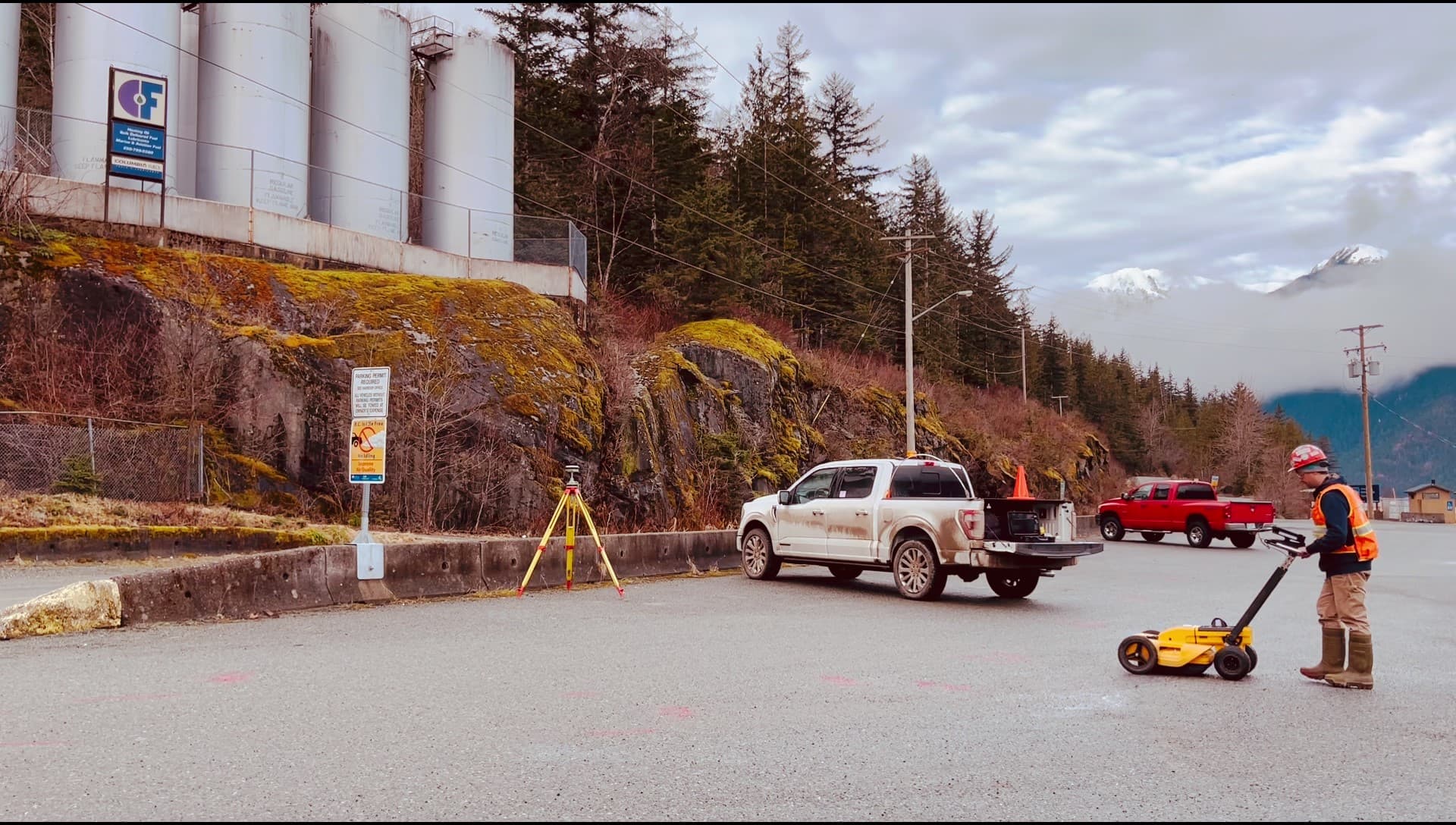
Electromagnetic and GPR locating of privately owned underground utilities — the lines one-call services don't mark — before you dig.
Learn More
Ground-Penetrating Radar
Non-destructive subsurface scanning for utilities, tanks, structures and anomalies — seeing what electromagnetic locating alone can't.
Learn MoreNeed camera & sonde?
Send drawings, site plans or a short description. We'll review and respond with a clear scope and quote.
Prefer to talk? 6 a.m. – 7 p.m., 7 days a week.
- Prince George(778) 764-1626
- Edmonton(587) 400-1260
- Vancouver(604) 800-8708
- Whitehorse(867) 322-3453