GPR Scanning in Whitehorse
Ground penetrating radar, utility investigation and subsurface scanning support for Whitehorse and Yukon projects.
GPR Scanning in Whitehorse & Yukon
PCI Surveys provides GPR scanning, ground penetrating radar investigation and subsurface scanning support in Whitehorse and across Yukon. We support contractors, excavators, engineers, homeowners, commercial properties, industrial sites, infrastructure projects, environmental consultants, mining projects and northern project teams who need more information about underground conditions before excavation, drilling, coring, trenching, construction or site investigation work begins.
GPR scanning can help investigate unknown buried services, private utilities, concrete, voids, buried structures and other subsurface features where records are incomplete, drawings are missing or site conditions are uncertain.
What Is GPR Scanning?
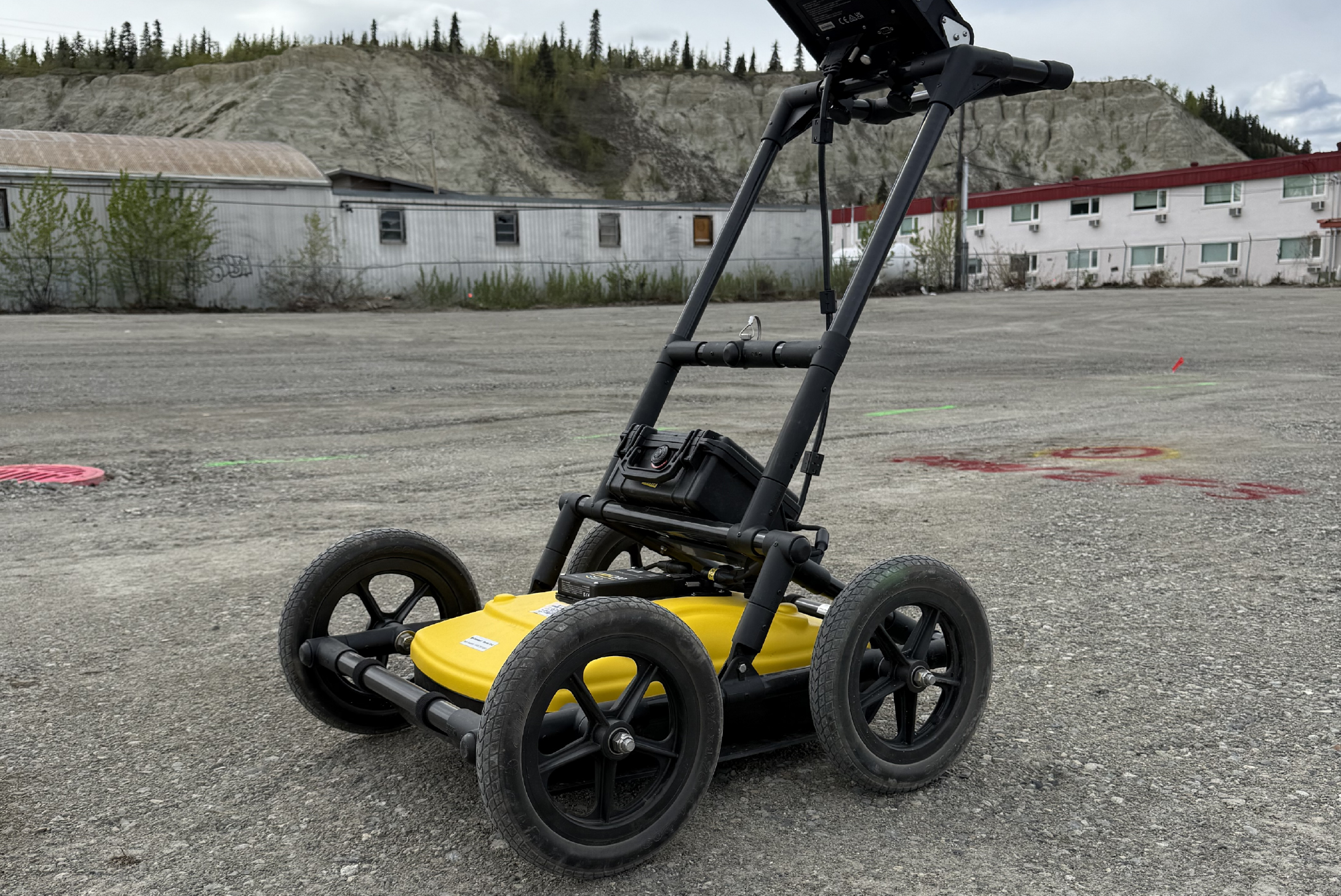
Ground penetrating radar uses radar signals to help identify changes below the surface. On residential, commercial, industrial, infrastructure, mining and remote project sites, GPR can be used to support utility investigation, private line locating, concrete scanning support and general subsurface investigation.
GPR is often used when there may be unknown buried services, when a utility cannot be directly connected to, when plans are incomplete or when more information is needed before ground disturbance, drilling, coring or construction work.
GPR Scanning for Utility Investigation
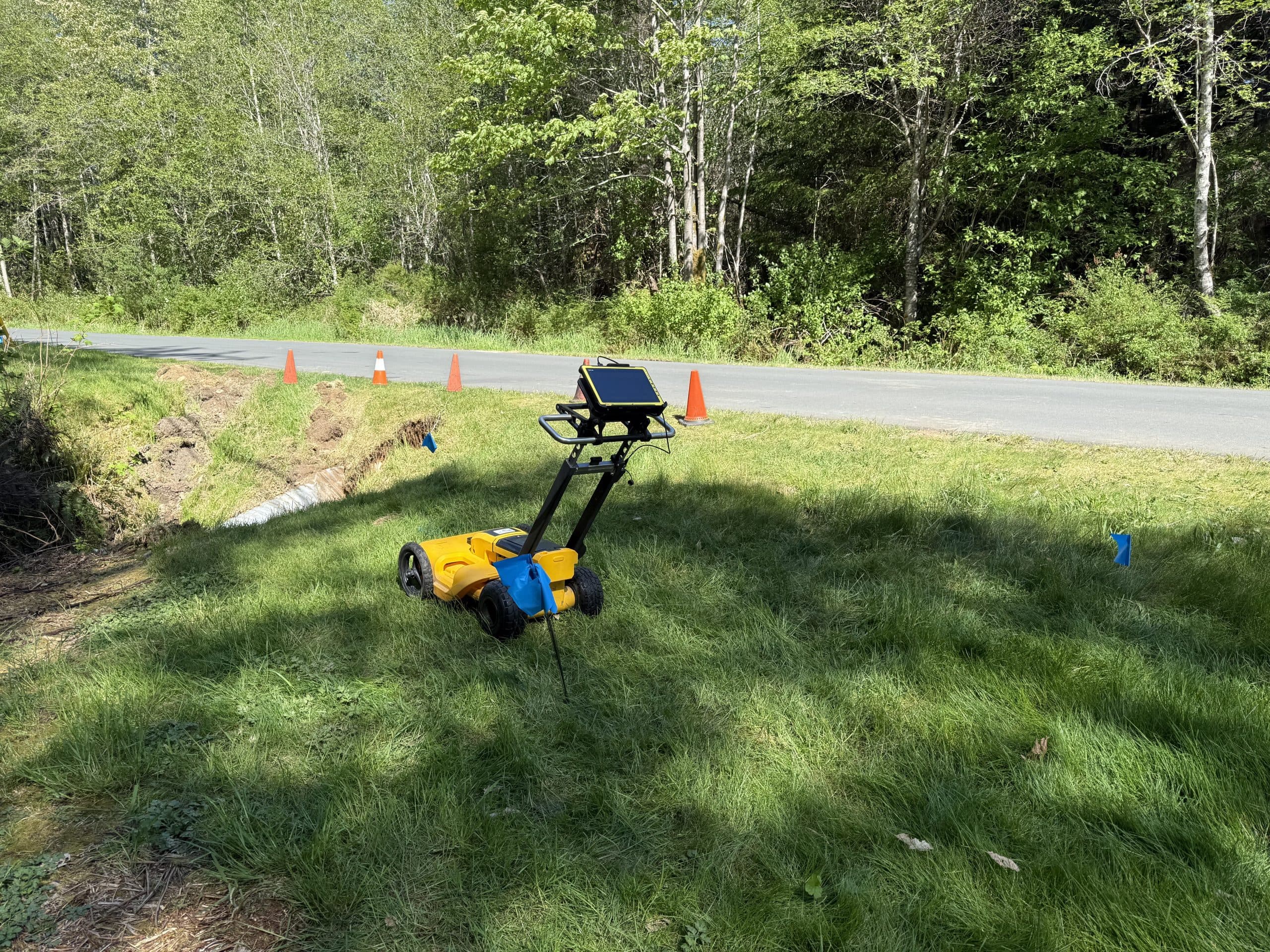
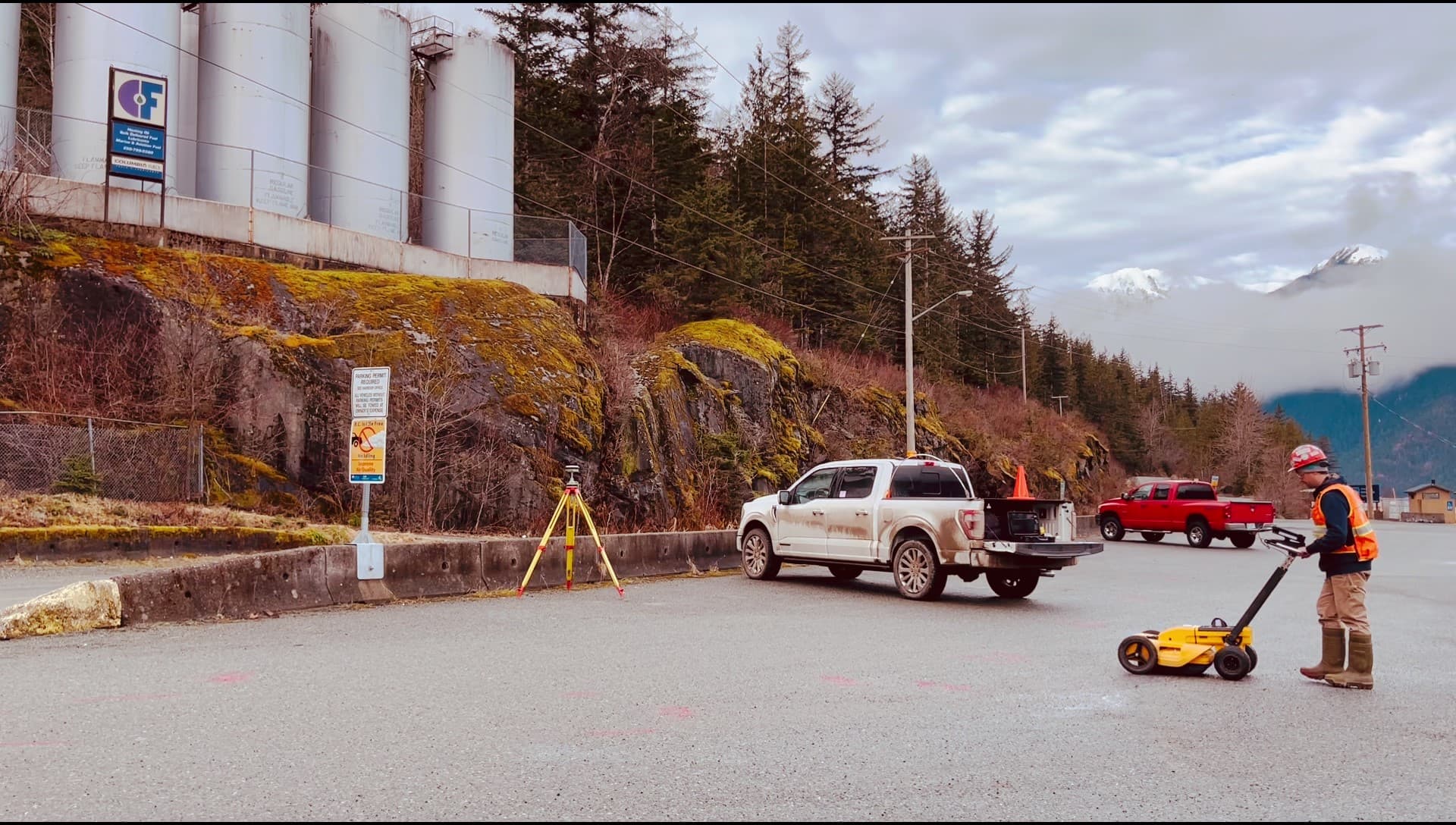
PCI Surveys uses GPR scanning to support underground utility investigation in Whitehorse and Yukon. GPR may help identify utilities and buried features that are difficult to locate with standard electromagnetic locating methods alone.
GPR can be useful for investigating:
- Unknown buried utilities
- Private underground services
- Non-metallic utilities
- Buried pipes and conduits
- Storm, sanitary and drainage features
- Septic and private wastewater services where applicable
- Underground structures
- Voids or changes below the surface
- Concrete slabs, rebar patterns and embedded features where applicable
- Areas where utility records or drawings are incomplete
GPR and Private Line Locating
GPR scanning is often used together with private line locating. Public utility locates may not identify privately owned underground services on private property, commercial sites, industrial yards, remote project sites, infrastructure sites, camps or within project limits. PCI Surveys can combine GPR with private locating methods to help reduce uncertainty before excavation or construction begins.
When site drawings are missing or incomplete, using both GPR and private line locating can provide a more complete investigation than relying on one method alone.
Learn more about private line locating in Whitehorse
GPR for Concrete Scanning Support
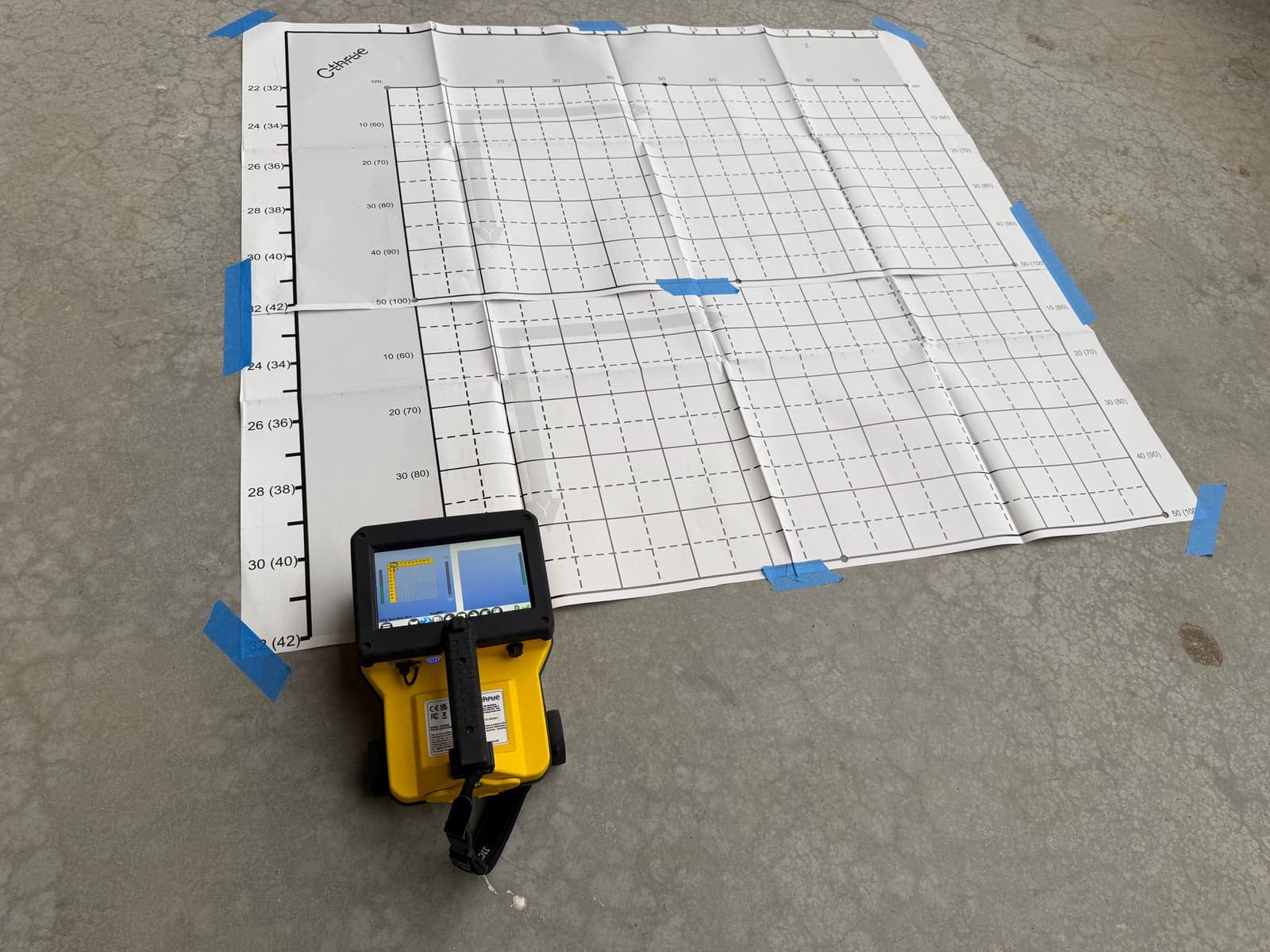
GPR can also be used to support concrete scanning where conditions allow. This can be useful before coring, saw cutting, drilling or renovation work where embedded features, rebar patterns or voids may need to be investigated.
Concrete scanning results depend on slab conditions, access, reinforcing density, depth, surface conditions and the specific target being investigated. PCI Surveys uses GPR as a practical investigation tool and communicates site limitations where they apply.
GPR Scanning for Northern Project Sites
Whitehorse and Yukon projects can involve remote access, seasonal conditions, older infrastructure, incomplete utility records, frozen ground, limited access points and large project areas. GPR scanning can help support subsurface investigation where unknown buried services or site features may be present.
GPR performance in northern conditions can be affected by frost, soil moisture, clay content, surface conditions, depth, material type and site access. PCI Surveys uses GPR as part of a practical investigation process and may combine it with electromagnetic locating, visual inspection, available drawings and survey measurements where appropriate.
When to Use GPR Scanning
GPR scanning can be useful before projects involving excavation, drilling, coring, trenching, grading, site servicing, construction or other work where unknown underground features may be present.
Common uses include:
- Utility investigation before excavation
- Private locating support
- Ground disturbance planning
- Commercial property investigation
- Industrial yard and site investigation
- Infrastructure and road project support
- Concrete scanning support before coring or cutting
- Environmental and geotechnical investigation support
- Mining, reclamation and resource site support
- Locating unknown buried features where drawings are incomplete
GPR Limitations and Site Conditions
GPR is a valuable investigation tool, but it does not find everything in every condition. Results depend on soil type, moisture, frost, clay content, surface conditions, depth, material type, congestion, access and the size or orientation of the buried feature.
For that reason, PCI Surveys uses GPR as part of a practical site investigation process. Where appropriate, GPR may be combined with electromagnetic locating, visual inspection, available drawings, surface features, access points and survey measurements.
Areas Served
PCI Surveys provides GPR scanning in Whitehorse and surrounding Yukon areas depending on project scope, schedule, access and mobilization requirements.
- Whitehorse
- Dawson City
- Watson Lake
- Haines Junction
- Carcross
- Tagish
- Marsh Lake
- Teslin
- Carmacks
- Faro
- Mayo
- Pelly Crossing
- Ross River
- Burwash Landing
- Beaver Creek
- Yukon project sites
Related Whitehorse and Yukon Services
- Whitehorse Service Area
- Private Line Locating in Whitehorse
- Construction Surveying in Whitehorse
- Drone LiDAR Surveying in Yukon
- Topographic and As-Built Surveys in Whitehorse
- Mining and Reclamation Surveying in Yukon
Why Choose PCI Surveys for GPR Scanning in Whitehorse?
- GPR, private line locating, surveying and drone LiDAR support from one field provider
- Experience supporting construction, infrastructure, commercial, industrial, environmental and northern project sites
- Practical site investigation support before excavation, drilling, coring or ground disturbance
- Support for Whitehorse, Yukon communities and regional project sites
- Ability to combine GPR, locating and survey measurements when needed
- Indigenous-owned and operated
Frequently Asked Questions
Do you provide GPR scanning in Whitehorse?
Yes. PCI Surveys provides GPR scanning in Whitehorse and surrounding Yukon areas for underground utility investigation, private locating support, concrete scanning support and subsurface investigation.
Can GPR find all underground utilities?
No. GPR is affected by soil conditions, moisture, frost, depth, material type, surface conditions and access. It is a useful investigation tool, but it is not a guarantee that every buried feature or utility will be detected.
Can GPR be used with private line locating?
Yes. GPR is often used with private line locating to investigate underground utilities and unknown buried features where drawings are incomplete or where electromagnetic locating alone may not provide enough information.
Can you scan concrete with GPR?
Yes. GPR can be used to support concrete scanning where site conditions allow. It may help identify embedded features, rebar patterns, voids or other changes in concrete before coring, cutting or drilling.
Do you provide GPR scanning for remote Yukon project sites?
Yes. PCI Surveys supports GPR scanning for Whitehorse and Yukon project sites depending on project scope, access, schedule and mobilization requirements.
Request GPR Scanning in Whitehorse
If you need GPR scanning, ground penetrating radar, private line locating, utility investigation or survey support in Whitehorse or Yukon, contact PCI Surveys with your project location, scope of work and schedule.
PCI Surveys - Whitehorse
Telephone: (867) 322-3453
Email: yt@pcisurveys.ca